



 IBA editorial team
 Change is part of everyday organisational life – and yet it is often experienced as an exceptional state. In conversation with the IBA Forum, Miriam Höller speaks about constructive ways of dealing with loss of control, the role of leadership in uncertain times, and why resilience can be trained. Drawing on personal experience, she offers practical impulses for companies, teams and work environments.
You talk on stage about courage, resilience and readiness for change – topics that currently concern many organisations. What personally led you to engage so intensively with change as a life theme?
My own painful setbacks. At first, confronting the greatest challenges of my life was not voluntary – I felt I had no choice. It was exhausting. I did not want to analyse or understand life. I simply wanted to live it. I have always been a lively, courageous and energetic person. But losing my health, my profession, my home and my partner in a helicopter accident – all within a short period of time – plunged me into a deep existential crisis. I lost not only trust in myself and in others, but also my fundamental trust in life. I had to rediscover it in order to move forward at all.
Many people initially experience change at work as a loss of control. In your view, what is the crucial first inner or practical step to move beyond that feeling and take action again?
The feeling of loss of control arises because we cling to the illusion that things will continue as they have. But they will not. Life is change – at all times. That is why we must learn to deal with it well. We seek control in all areas of life because it provides security. Yet we cannot control what life demands of us next – only how we respond to it. The most valuable first step is not to perceive the loss of control as an existential threat, but as an opportunity for positive change.
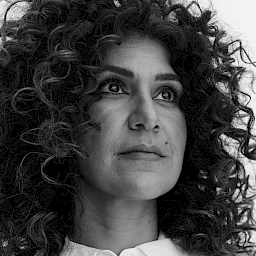
From your time as a stuntwoman, you know risk, preparation and the conscious handling of fear very well. Which principles from that world can be directly transferred to change processes in organisations?
When you feel fear, you are often precisely at the point where growth begins. The way we deal with fear is crucial, because we frequently misinterpret it. Fear is important – it protects us from real danger. But in change processes, we are not in mortal danger – we are in the dynamic of life.
It is about reassessing the symptoms. The racing thoughts, the tension, the uncertainty – that is the moment when you stand at the open door of an aircraft. Deep inside, you know you have all the abilities required to jump, to fly and to land. Yet most people remain seated. That too is a decision. The pilot carries responsibility – he flies where he chooses. Courageous people assume that responsibility for their own lives. They trust themselves, step beyond their fear into uncertainty, and use it as an opportunity for growth.
Resilience has become something of a buzzword in many strategy papers. How do you define resilience in concrete terms, and which misunderstandings or false expectations do you encounter most often in organisations?
Resilience is our psychological ability to deal with change. It sounds simple, but it is challenging. Yet every ability we possess was once learned. The more we practise it, the stronger it becomes. The same applies to our mental resilience. If you have spent your life only within your comfort zone, never taken risks and never tested yourself beyond your fears and limits, how could you have learned to rely on yourself in extreme situations? For me, stunt work was years of preparation for my most severe life crisis. During that crisis, I had forgotten who I was. I simply had to remember that I was capable of carrying myself through dangerous situations. Resilience can be trained. And it is decisive. That is why we should strengthen it consciously – not only when life tests us, but in everyday situations. It does not require heroic acts. Small challenges in which we repeatedly prove to ourselves, “I can do this,” are enough.
When everything turns out differently than planned – projects fail, markets collapse, teams are restructured – which core questions can people ask themselves in order not to remain stuck in the problem but to regain perspective?
Every crisis asks you one question: will you stay down – or will you get up? Do you want to remain a victim of your circumstances, or take responsibility for your next chapter? Focus not on what has happened, but on what you now make of it. What must I accept, even if I dislike it? And what can I change? And then the decisive question: what could – at best – emerge from this disaster? For you. For others. Perhaps precisely what would never have been possible without this moment.
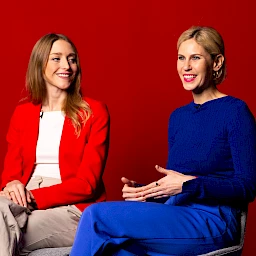
Change is not only an individual matter, but an organisational one. How can you tell whether an organisation is genuinely ready for change?
It begins with attitude. Organisations consist of people, and people approach life with a certain mindset. This becomes visible in body language and in language itself: are sentences framed in resignation or in solution-oriented terms? How are mistakes handled? How are decisions made? From this, group dynamics emerge. There are always leaders – people with the ability and competence to think clearly, focus on what matters and make decisions. It is important for them to understand that they are being observed. Others orient themselves towards them. Many team members are uncertain and ask themselves internally: give up or fight? They would like to contribute, perhaps even to triumph later, but they lack the confidence to take the first step. If they wish to grow, they should look to the leaders. And then there are those who give up internally before things have truly begun. They weaken the dynamic. Unfortunately, it often takes great pain or pressure before we begin to act. We rarely feel ready. I did not feel ready either. Yet we only discover how strong we truly are when we dare to take the difficult path.
What role do leaders play in dealing with disruption and uncertainty? What would you wish for from leadership in terms of transparency, error culture and handling emotions in change processes?
The phoenix symbolises renewal. In teams, curiosity is a central driving force. Everyone asks themselves: What is inside me? How strong am I? Will I manage? Many remain on the surface – not because they are incapable, but because they avoid the effort of finding out. Leaders should understand how to awaken this curiosity and make each person aware of the significance of their development within the change process. It is important to provide only as much information as people can process, so they can focus on their area of responsibility rather than feeling overwhelmed. Equally important is encouraging action and making clear that mistakes will happen. Mistakes are not failure. They are collected information. They refine skills. Leaders must also understand the fundamental emotions that arise during change. These emotions become visible within the team and shape group dynamics. Through openness and clear communication, these dynamics can be guided and channelled constructively.
Many of our readers work in offices, on projects and in hybrid environments. Which small, realistic everyday routines or rituals would you recommend to help teams become more resilient and courageous in dealing with change?
We fight for people who feel close to us. What connects us is our vulnerability. In small or larger groups, everyone can answer the question: what was my biggest mistake this week – and what did I learn from it? Honest answers create closeness. People learn from and with each other and build a genuine error culture. We also fight more determinedly when we know what we are fighting for. An emotional goal is crucial. It helps us get up in the morning and persevere when things become difficult. It is not starting that is rewarded – but staying the course. A visual timeline can be helpful: define a clear starting point and a concrete goal. In between, make key events, learning experiences and interim successes visible. Progress becomes tangible. Motivation arises not from pressure, but from experienced development.
Please also read

When you think about the world of work in the coming years, what would you like to encourage people to do – regardless of sector, function or hierarchy?
You matter. Not someday. Not when you are promoted. Not when you officially carry responsibility. Now. Your attitude has impact. Your words have impact. Your decisions have impact. You are being observed – whether you like it or not. The only question is: what do you stand for? Doubt or confidence? Excuses or solutions? Stagnation or movement? Never underestimate your influence. Positive dynamics do not emerge from mission statements, but from daily behaviour. And perhaps change begins precisely at the moment you decide to embody it.
Change requires not only attitude but also the right framework conditions. In your view, what role do work environments, spaces and structures play in determining whether people act courageously or withdraw?
Change requires space – both physical and psychological. Physical environments have a direct impact: light, openness and flexible settings encourage participation, whereas rigid structures tend to promote withdrawal. The environment influences whether people feel safe and capable of acting. Psychological space is equally decisive: is there room for questions, mistakes and honest feedback? Where psychological safety exists, courage emerges. Development also requires room to experiment and time to recover. Children grow by playing – they test limits, fail and try again. If we perceive challenges as training grounds rather than threats, the energy shifts. Breaks create clarity; play fosters creativity. Only when physical space, psychological safety and conscious recovery come together does genuine capacity for change arise.
Thank you for talking with us, Miriam.