

 IBA editorial team
 After years of profound technological, social, and economic transformation, the world of work is once again at a turning point. The Gensler Global Workplace Survey 2025 makes one thing clear: the physical workplace remains a central anchor of modern organizations — but its purpose is fundamentally changing. Based on responses from more than 16,800 office workers in 15 countries, the study explores how people around the world experience their work environment and which factors enhance productivity, satisfaction, and innovation. The findings show that traditional office design concepts have reached their limits. Employees today expect environments that balance flexibility, social connection, and personal agency. Work is increasingly understood as an experience — a dynamic interplay between space, technology, and community.
From office to hub of experience and connection
One of the study’s key findings is that the physical workplace is not being replaced but redefined. Eight out of ten respondents say they form meaningful relationships across generations and hierarchies in the office. Three of the five most common reasons to come to the workplace are social in nature: collaboration, exchange, and belonging. While digital tools enable much, the physical environment remains essential to what makes companies unique — their culture, trust, and innovation. The office thus becomes a place that actively promotes connection and collaboration and serves as a cultural anchor for organizations.
Insight 1: The physical workplace needs a new value proposition
The study reveals that workplaces redesigned after the pandemic perform better in many respects: 76% of employees report having more choice, better air quality, more flexible furniture, and more spaces for focus or social interaction. Yet there is still room for improvement — only a small portion of employees describe their workplace as fully effective. The biggest challenges are noise levels, lack of privacy, and limited space availability. To remain future-ready, workplaces must be planned more precisely. Gensler recommends creating a balanced mix of focus, collaboration, and rejuvenation spaces, structured according to different work modes. The key factor is the quality of these options: How many types of spaces exist, and how easily can they actually be used?
Insight 2: Employees want holistic experiences, not traditional offices
Currently, only about one-third of employees rate their workplace as inspiring or versatile. Just 38% strongly agree that their office provides positive experiences. This highlights a clear gap between employees’ expectations and their daily reality. While many still work in conventionally designed spaces focused solely on business efficiency, they increasingly desire environments that integrate nature, creativity, social exchange, and well-being.
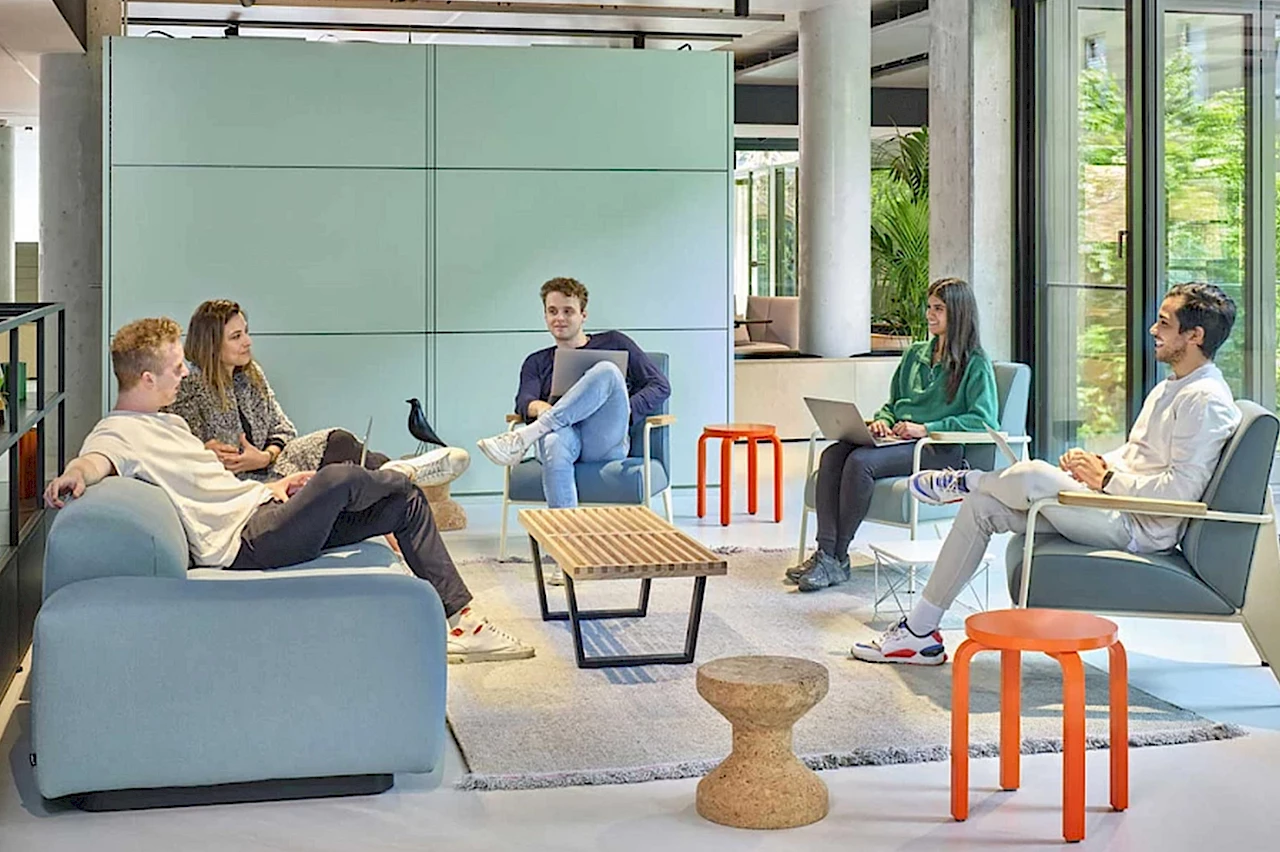
According to the survey, the most sought-after space types include:
- Nature Retreats: areas with daylight, plants, and fresh air
- Creative Labs: flexible zones for prototyping, ideation, and co-creation
- Clubhouse Areas: welcoming hubs for team interaction and social exchange
- Learning Zones: spaces that support ongoing development and learning
- Residential Settings: workplaces with a familiar, comfortable atmosphere
The study underscores that employees now expect authentic experience quality, comfort, and flexibility—not just logos and brand colors. Companies are therefore challenged to rethink their brand spatially and to integrate the needs of their teams in the process. Another key finding: workplace perception extends beyond the office itself. Employees increasingly value cafés, restaurants, outdoor areas, health services, and accessible local amenities. These features reflect their desire for well-being, flexibility, and quality of life at work.

Insight 3: Collaboration thrives on diversity and flexibility
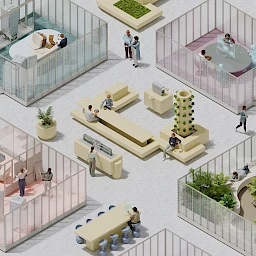
Good workplaces nurture creativity, engagement, and loyalty. Gensler’s data show that spatial quality directly correlates with motivation, innovation, and commitment. Employees who describe their workplace as inspiring are significantly more likely to try new work methods, invest extra energy in their teams, and feel greater overall satisfaction. They also identify more strongly with their company and are 3.5 times more likely to recommend it to others. For such outcomes, companies need more than traditional meeting rooms — they require flexible co-creation spaces, creative labs, and lounge-like collaboration areas. The study identifies seven distinct modes of in-person collaboration, ranging from informal one-on-one conversations and confidential meetings to spontaneous group sessions, structured teamwork, and co-creation workshops. Most employees come to the office to collaborate, brainstorm, share ideas, and find inspiration. Multifunctional spaces with varied seating and setups are particularly valued, as they support both formal and informal exchange.
Notably, employees with a positive perception of their work environment are nearly five times more open to experimentation, three times more likely to engage in spontaneous conversations, and over twice as happy at work as those with neutral views. They report stronger purpose and energy, greater innovation, and deeper company loyalty. Well-designed workplaces attract top talent, strengthen team spirit, and make the employer brand tangible. For organizations, this means: the strategic design of the work environment is a key driver of productivity and culture. Flexible, diverse spaces that foster collaboration and inspiration enhance engagement and innovation — and thus define the future-ready employer brand.
Conclusion: Workplace design as a strategic success factor
Tomorrow’s workplaces are not static products — they require continuous adaptation and co-creation. Concretely, this means:
- Solution-oriented design:
Acoustics, lighting, air quality, and temperature must be right; only then can employees perform at their best. - Diversity as strength:
Real choice between retreat zones, collaborative spaces, and informal meeting areas supports individual work styles and team dynamics. - Participation as key:
Involving employees in design and change processes builds acceptance and identification — an area where, as the report shows, there is still room to grow. - Ongoing development:
Companies should regularly evaluate their workplaces, adapt them to new needs, and remain agile in responding to change.
The Gensler Global Workplace Survey 2025 describes a world of work in transition — from functional space to cultural experience. Success emerges where environments foster connection, embrace diversity, and inspire joy in work. Future-ready workplaces must convince both technically and emotionally. As Gensler aptly summarizes: “A workplace that doesn’t inspire, doesn’t work.” Those who view workplace design as a strategic leadership tool shape not only physical spaces — but also the culture that will define organizational success in the years to come.