

 IBA editorial team
 Invisible organisational and care-related work not only shapes private life but also everyday working environments. In conversation with the IBA Forum, Laura Fröhlich explains how mental load emerges within organisations, how it affects health and leadership, and which structural changes can help reduce pressure.
Laura, the term mental load is often used in a private context. How can it be applied to everyday working life?
Mental load refers to the invisible organisational work of everyday life, the responsibility of having to think about everything and keep everything in mind. Most people initially associate this with household tasks, childcare or caring for relatives. However, similar forms of care and organisational work also exist in professional settings, wherever people work together. Someone takes care of the team atmosphere, listens to colleagues, organises a company event, decorates the office or writes birthday cards. This relational and care work is important for effective collaboration, yet it is rarely formally recognised or evaluated as performance, even though it requires time and mental resources. It is striking that these tasks often fall to women. This has less to do with individual preference and more with social expectations. As a result, mental load also becomes a structural issue in the workplace.
Is mental load concentrated at certain hierarchical levels or does it run through the entire organisation?
Mental load exists across all levels of an organisation, but it manifests in different ways. Leaders carry not only professional responsibility but also emotional responsibility for their teams. They perceive pressures, moderate tensions and respond to absences, often in addition to their own workload. At employee level, mental load frequently appears in the form of invisible additional work, for example through coordination, social integration or informal communication. These activities are essential for team functioning but are rarely reflected in target systems or performance evaluations. There is also a gender dimension: care-related competence is more strongly associated with women. As a result, women are more likely to take on these tasks and are less often considered for strategic or career-enhancing activities.
How can employees recognise when mental load and pressure are becoming critical?
The warning signs resemble classic stress symptoms. It becomes particularly critical when this condition persists over time. If the working day begins with the feeling of constantly trying to catch up, if to do lists continue to grow and focused work becomes almost impossible, a constant internal pressure develops. Frequent interruptions without sufficient recovery phases are also typical. Anyone who continues thinking about work during breaks, sleeps poorly or feels constantly tense should take these signals seriously. The situation becomes problematic when this state becomes the norm. Over the long term, chronic overload can lead to health consequences, both physical and psychological. This is why prevention is crucial, even though it often receives less attention in everyday working life than acute crises.
What everyday routines can help counteract mental load?
Small, consciously planned breaks during the working day can be helpful. Short, ritualised pauses, such as taking a few mindful breaths before starting the day or briefly stepping to the window after a meeting, create moments of self awareness. The aim is not long breaks but brief interruptions of constant functioning. Another effective lever is structured prioritisation. Instead of immediately jumping into tasks, it can be useful to start the day with a short check in: What is truly urgent today? What can be delegated? Where is responsibility shared within the team? This conscious prioritisation can reduce mental pressure. At the same time, such routines become more effective when they are accepted and supported across the team. Individual strategies reach their limits when the surrounding environment expects constant availability.
Care work in organisations is often carried out by the same people. How can teams become fairer?
The first step is visibility. Teams can jointly clarify which informal tasks exist alongside their core responsibilities. Who organises gifts, moderates meetings, reminds colleagues of deadlines or takes care of team cohesion? And are these activities officially recognised, or do they simply happen in the background? Transparency also enables rotation. Tasks can be consciously distributed or assigned for a limited period so that the same individuals are not always responsible. Short team check ins, for example during regular meetings, can also help make workloads visible and distribute responsibilities more fairly. It is equally important to question stereotypical expectations. Statements such as “She’s so good at organising that” or “He’s not really the type for that” often seem harmless but can have real consequences for task distribution and career development.
What role do boundaries and a clear “no” play in the professional context?
Boundaries play a central role in workplace resilience. At the same time, the common advice to “just say no” is too simplistic, and that is something I also discuss in my book. For many women it is significantly more difficult to refuse care-related additional tasks. If they no longer want to take minutes in meetings or organise gifts, colleagues often react with surprise: “Why isn’t she doing that anymore?” or “She’s so good at it.” Such expectations often lead people to take on tasks in order to avoid conflict or feelings of guilt. Simply telling individuals to say “no” therefore does not solve the problem. What is needed is an organisational climate in which boundaries are respected and refusal is not interpreted as a lack of collegiality. Only when expectations and structures are reflected can individuals sustainably change their behaviour.
Please also read

Which structural levers do you see at organisational level?
Mental health should be an explicit part of organisational strategy. This includes flexible working time models, transparent task distribution and realistic performance expectations. Working time culture is particularly relevant. Part time work or shared leadership positions should not be seen as models exclusively for women. As long as care work is primarily attributed to women, existing inequalities will persist. It is therefore important to normalise part time models for men and to promote alternative leadership models such as job sharing or tandem leadership. At the same time, organisations should question existing expectations around availability and presence. In many organisations the ideal of constant full time availability still prevails. This makes a fair distribution of care responsibilities more difficult and increases pressure on employees over time. Ultimately, there also needs to be greater awareness that care work, both in private life and within teams, is a prerequisite for effective collaboration. Organisations that recognise this reality and incorporate it structurally create healthier and more stable working environments in the long term.
What role do spaces play in relation to mental load and resilience in everyday work?
Spaces influence us more strongly than we often realise. If working environments are permanently designed around interruptions, constant cognitive strain arises. The brain must continuously react, prioritise and filter information, which significantly increases mental load. Offices therefore need not only spaces for exchange but also areas for focused work. The goal is not necessarily to provide everyone with a private office, but to create opportunities to temporarily withdraw. Digital spaces also play a role. Constant availability, push notifications and parallel communication channels increase mental fragmentation. Clear focus times and the conscious use of do not disturb modes can therefore be helpful. However, the surrounding environment is crucial. Such rules only work if they are accepted within the team and actively supported by leadership. This becomes particularly important in hybrid working models, where otherwise new forms of pressure can easily emerge.
Where should organisations begin if they want to systematically reduce mental load?
A useful starting point is an honest analysis of the invisible work within the organisation. Which activities support collaboration but are not formally recognised? Who performs them? And how do spatial structures, working time culture and leadership practices interact in this context? Mental load is not an individual problem of certain employees but an indicator of structural imbalances. When care work is implicitly expected but not recognised, an imbalance emerges. Organisations that take mental load seriously therefore do not focus solely on strengthening individual resilience. They also redesign the surrounding conditions through fair task distribution, flexible and gender equitable working models, clear communication rules and leadership that recognises emotional labour as part of the role. Ultimately, the question is a fundamental one: How do we want to work, and under which conditions can people remain productive in the long term without burning out? Mental load makes visible that productivity and care are closely interconnected.
Thank you for talking with us, Laura.
Laura Fröhlich ist eine der bekanntesten Expertinnen im deutschsprachigen Raum zum Thema Mental Load – der unsichtbaren Denkarbeit, die oft ungleich verteilt ist. Als Spiegel-Bestsellerautorin, Speakerin und dreifache Mutter vermittelt sie mit Empathie, Humor und Tiefgang, wie Familien, Paare und Unternehmen Verantwortung gerechter teilen und so mehr mentale Entlastung erreichen können. Mit ihren Büchern, darunter Die Frau fürs Leben ist nicht das Mädchen für alles (Kösel Verlag), Familie als Team (Rowohlt Verlag, 2025) und dem Spiegel-Bestseller Ich bin nicht eure Feelgood-Managerin (Kösel Verlag, 2026) sowie zahlreichen Fernsehauftritten und Interviews, hat sie dazu beigetragen, das Thema Mental Load in die breite Öffentlichkeit zu bringen. In Workshops, Keynotes, Vorträgen und Online-Formaten begleitet sie Menschen, Teams und Unternehmen dabei, faire Arbeitsteilung, partnerschaftliche Kommunikation und familienfreundliche Strukturen zu fördern. Ihr Ansatz verbindet Erkenntnisse aus Psychologie, Soziologie und Organisationsentwicklung mit praktischen Methoden für den Alltag, etwa durch Familienregeln, Wochenplanungen und das Küchenmeeting als Ritual für Klarheit und Gleichgewicht. Weitere Informationen: https://www.froehlichimtext.de/
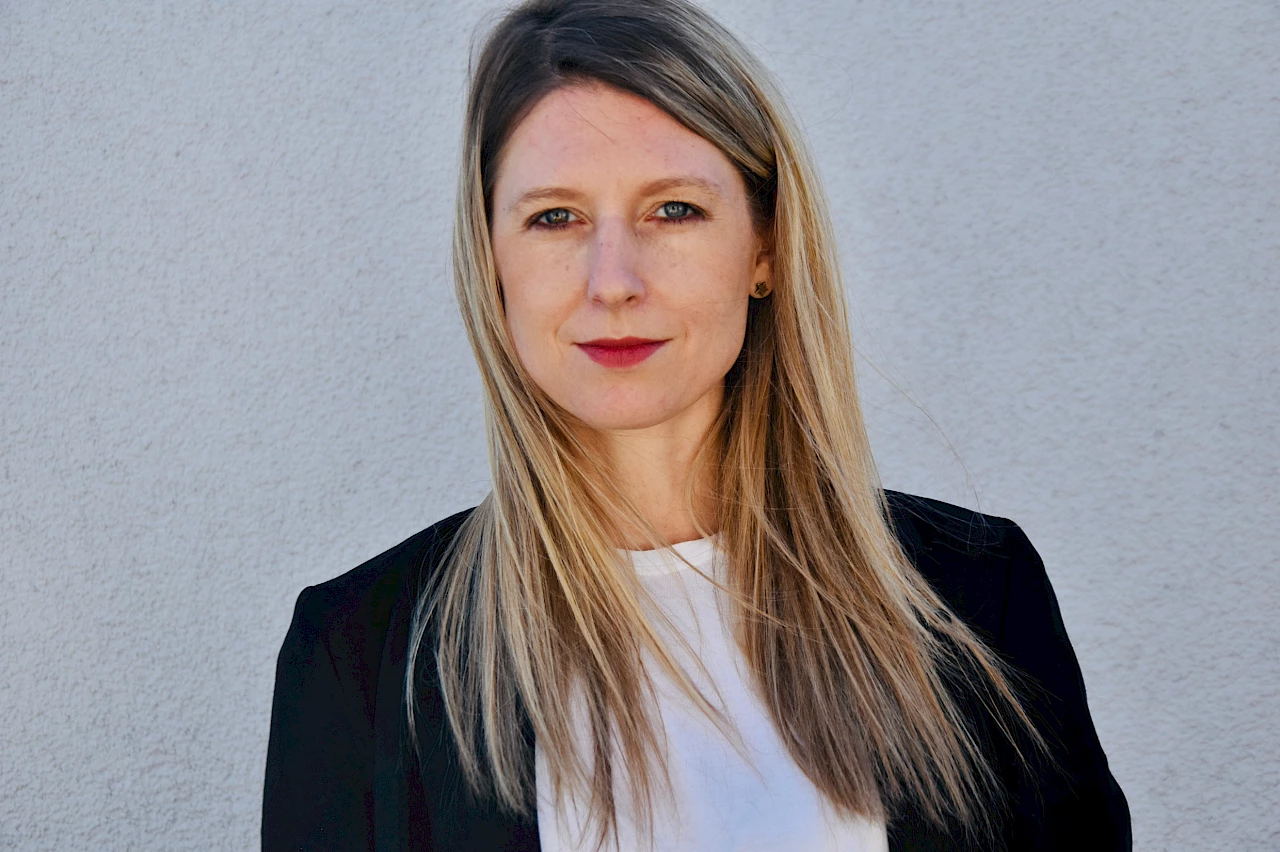
Titelbild: Laura Fröhlich / Kösel-Verlag