


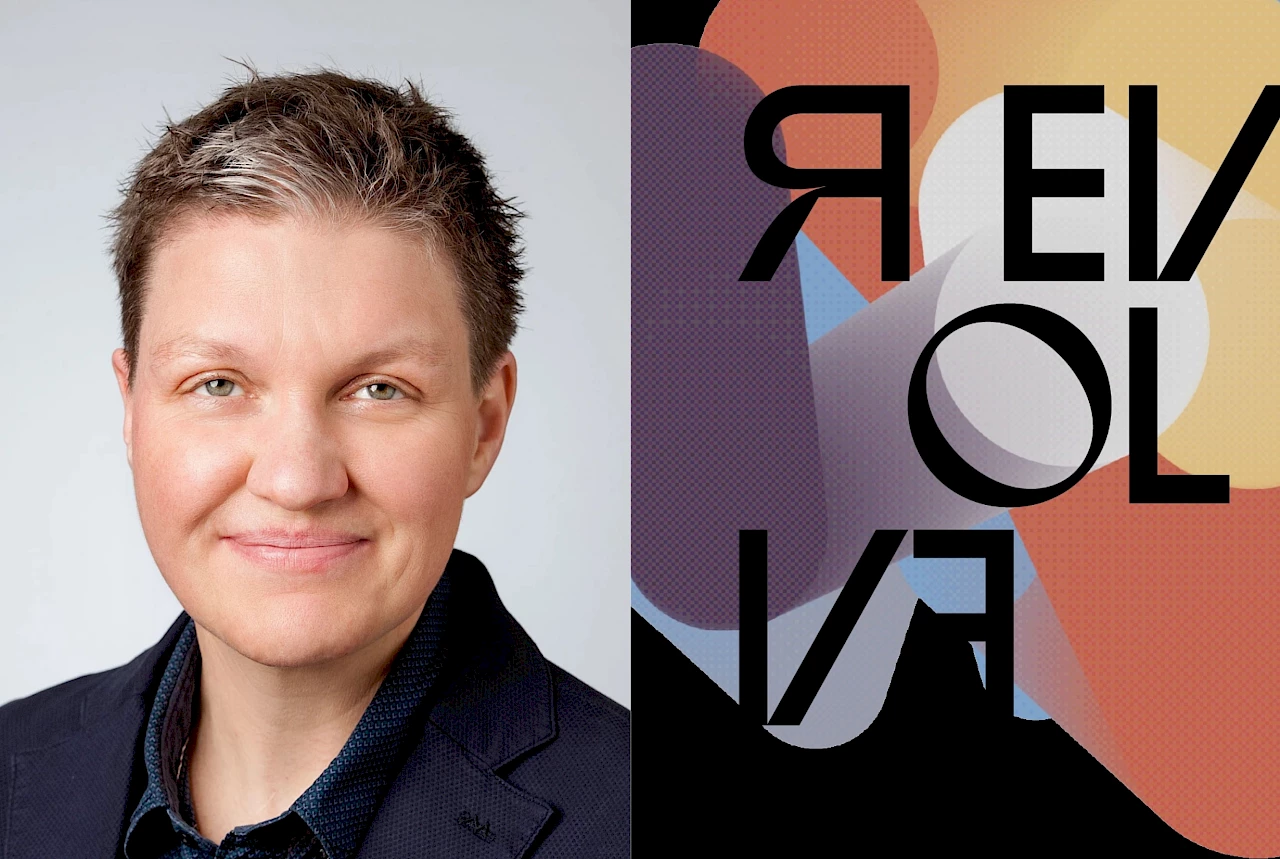
 IBA editorial team
 As part of the EU-funded R‑evolve project, an international consortium is working to advance the circular economy in the furniture industry in a practical and application-oriented way. The aim is to prepare companies for upcoming regulatory requirements while developing concrete approaches in product design, data management, business models and material strategies. In this interview with the IBA Forum, environmental scientist and project coordinator Angelika Tisch explains how R‑evolve is structured, where the project currently stands, and why its results are particularly relevant for companies that are not yet fully equipped to tackle the challenges of the circular economy.
Ms Tisch, R‑evolve brings together partners from several European countries and different sectors. How is the consortium structured?
We essentially have three groups of partners in the project. Firstly, there are associations, organisations and cluster initiatives from several European countries, including Germany, Italy, Slovenia, Denmark and Spain. Secondly, there are scientific and technical partners, such as universities, research institutions and application-oriented organisations. The third group consists of companies that are involved in the project as practice partners. This mix is particularly important, as the circular economy in the furniture industry is not only a matter of research or regulation – it also involves product development, material use, data availability, business models and ultimately market implementation. This requires partners who approach the topic from different perspectives.
In your view, what makes collaboration in such a complex European project particularly valuable?
A key added value lies in the exchange itself. Within the project, we engage with stakeholders we would probably not collaborate with in our day-to-day work. The European perspective on progress, approaches and even challenges in other countries is extremely helpful. At the same time, collaboration within the project is very constructive. The partners are seriously committed to the topics, and the overall atmosphere is very positive. That may sound self-evident, but it is not necessarily the case in large projects. This makes the exchange within the consortium a success in itself.
How do you ensure that everyone is working towards the same vision, especially when many partners with different interests are involved?
At the beginning of the project, we developed a shared vision through a comprehensive process, facilitated by Darmstadt University of Applied Sciences. This vision underpins all our activities. However, one must be realistic: developing a vision does not automatically mean it is equally embedded among all partners. What unites everyone, however, is the clear goal of preparing for upcoming regulatory requirements – particularly with regard to the Ecodesign for Sustainable Products Regulation (ESPR) and the expected delegated acts. For companies, this is a strong motivator. They know that requirements will change and that they need to be prepared. Some partners focus more on what will be legally required, while others pursue more ambitious sustainability goals. This range is normal in such a consortium. What matters is that practical, applicable results emerge.
Where does the project currently stand? Are you satisfied with progress so far?
I have the impression that we are broadly on track. We began with a research phase focusing on four key areas: firstly, circular business models – that is, models that enable the circular economy to be implemented in an economically viable way. Secondly, governance issues around the digital product passport, including questions about which data must be provided, in what quality, how and for whom. Thirdly, product design – in other words, how furniture must be designed to enable strategies such as repairability, durability and circularity. And fourthly, materials, for example what information on recycled materials is required to assess their quality. At the same time, pilot projects are being carried out with companies, where the findings are tested, applied and further developed. Naturally, partners are progressing at different speeds. Overall, however, we are making good progress and working with many committed and proactive partners.
What concrete outcomes are expected from R‑evolve?
Our aim is to prepare the results from research and pilot projects in such a way that they become clear and practical guidelines for companies. It is not just about producing reports for experts, but about creating materials that can be applied in practice. The next major step is an innovation programme involving 50 furniture manufacturers. They will be able to choose from a range of approaches – for example in business models, product design, material information or data structures – and test them in their own context. Associations will play a key role here, as they will support the companies closely and act as an interface between the project and practical implementation.

That sounds like a very concrete support offer for the industry. What can companies actually take away from the project?
Support is precisely the aim of R‑evolve. We want to enable companies to implement measures that advance them on their path towards the circular economy. This includes product design, material use, potential new business models and, in the future, requirements related to the digital product passport. Importantly, the project results will generally be accessible to all. Companies participating in the supported innovation programme will also receive direct support, consultations and expert guidance. This represents significant added value, particularly for companies that do not have all the necessary expertise and resources in-house.
To what extent is the project relevant in terms of regulation?
At this stage, we cannot guarantee that every measure will be fully compliant with future regulations without adjustments, as key regulatory details are still pending. However, we can say that companies adopting the approaches developed in the project will be much better prepared. We also aim to feed our findings into the regulatory discourse. By identifying what works in practice and where the limits lie, the project can help shape future requirements in a realistic way. Companies that engage with these issues now will not be starting from scratch when regulations become concrete.
Why is the project particularly relevant for the industry right now?
Because many companies are aware that change is coming, but often lack the time or resources in their day-to-day operations to address it strategically. This is where the project comes in. It consolidates knowledge, tests approaches in practice and turns them into usable solutions. There is also an aspect that is still often underestimated: data is increasingly becoming a prerequisite for market access. Or, as it has been aptly put in the project context: “No data, no market.” Companies that cannot provide reliable product and sustainability data will find it more difficult to compete. For this reason, engaging with the circular economy is no longer purely a sustainability issue, but a strategic one for the entire industry.
What should people particularly remember when thinking about R‑evolve?
That the project does not just talk about the circular economy, but also develops concrete tools to help companies take action. And that Europe is an important learning space. We have very strong partners from different countries, particularly Italy and Germany, who bring significant expertise to the collaboration. This European exchange is a key component of R‑evolve. Ultimately, the goal is to provide companies with the tools they need to meet regulatory requirements and actively shape the transition.
Ms Tisch, thank you for the interview.