


 IBA editorial team
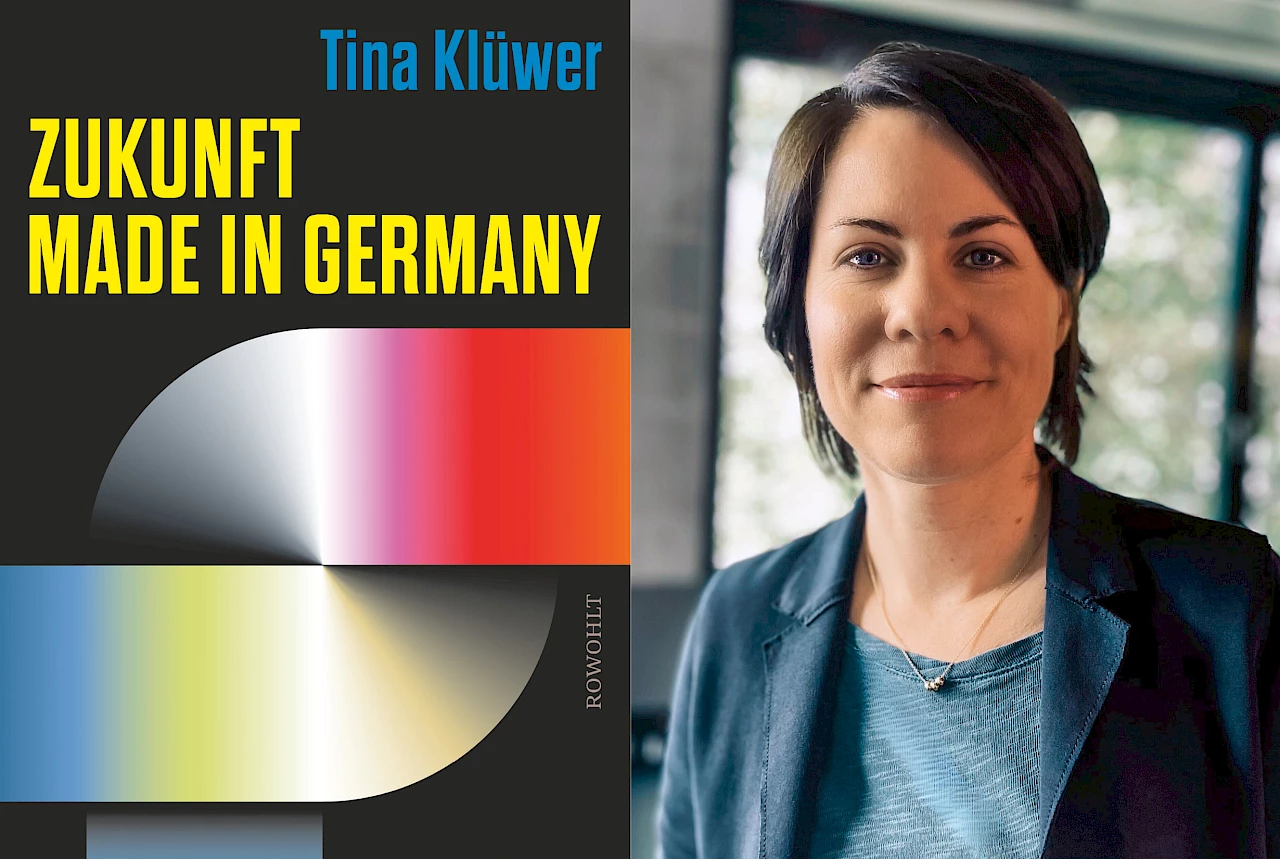
 The German economy is under pressure. Traditional leading industries are losing momentum, geopolitical tensions are reshaping markets, and technological developments are accelerating worldwide. Artificial intelligence is widely regarded as one of the key technologies of this era. Yet innovation pressure and regulatory caution often result in hesitation. In an interview with the IBA Forum, Tina Klüwer, expert in innovation policy and author of Future Made in Germany, explains why AI is far more than an efficiency tool and why inaction itself can become a risk for companies and for Germany as a business location.
Ms Klüwer, what role does artificial intelligence play in Germany’s future competitiveness?
Artificial intelligence plays a central role, alongside other future technologies such as quantum technologies or new semiconductor architectures. We are currently experiencing a phase in which the traditional German economic structure is undergoing profound change. Beyond geopolitical factors, I see above all an innovation crisis. Innovation renews economic activity. It creates new markets, new products and new value creation. We can actively use these technologies to generate prosperity, or we can let this opportunity pass us by. That is precisely the crossroads at which we find ourselves. AI is not an isolated technological issue; it is a strategic decision about Germany as a business location.
Where do we currently stand in relation to AI?
Germany has an excellent scientific landscape. Our research is strong and our institutes produce internationally recognised results. The problem lies less in knowledge than in implementation. Innovation only works if the entire chain from invention to business model to market penetration functions coherently. In our case, that chain frequently breaks down. We produce outstanding research, but too rarely bring scalable products to market. It is precisely this gap that costs us momentum.

Where do you see the greatest structural deficits?
We lack permeability between academia and industry. Transitions in both directions are complicated and often culturally discouraged. At the same time, our sectoral structure has changed. For decades, the automotive industry was the engine of innovation. Today, growth dynamics are emerging primarily in software, AI and digital infrastructures. In these areas, we lack a strong ecosystem. In the United States, major technology companies support one another, invest, collaborate and generate strong pull effects. In Germany, we have SAP as a large software company, but no comparable network of strong players that would enable systematic scaling.
Where are the greatest levers for companies?
Many companies currently use AI primarily to increase efficiency, for example in process optimisation, automation and cost reduction. That is sensible and necessary. Those who fail to keep pace will face competitive disadvantages. However, efficiency alone is not enough. If everyone uses the same tools, the advantage levels out. The sustainable difference arises through product innovation. AI can create new value propositions, transform business models and open up markets. That is where the strategic leverage lies.
What obstacles do you observe in practice?
In my view, it is a combination of lacking strategic clarity, competence issues and cultural differences. Interestingly, the dynamics have shifted. At the outset, employees were often curious while leaders hesitated. Today, many leaders engage more intensively with AI, though not always in a structured way. Some companies require employees to use AI tools without allocating time or providing proper training. Others block applications entirely for data protection reasons. Both approaches lead to a dead end. It becomes particularly critical when employees use AI informally because official guidelines are missing.

How should a medium-sized company approach AI in practical terms?
First, the company should assess whether it possesses the necessary internal expertise or requires external support. I would strongly advise against simply starting without involving someone who can place the measures in a strategic context. The next step is a structured analysis: where do genuine value potentials arise? Which processes, products or services offer realistic prospects of a high return on investment? At present, many organisations are building AI agents in an uncoordinated way for similar tasks such as email summaries, research tools or reporting. Without central oversight, duplication of effort is common. Companies should enable experimentation while at the same time coordinating and prioritising their efforts.
How does AI change collaboration within companies?
AI can significantly support onboarding, training and knowledge work. In times of skills shortages, this provides relief. New employees can access information more quickly and learn independently. At the same time, team dynamics change. When AI assumes certain tasks, responsibilities shift. Teams must redefine who decides, evaluates and shapes outcomes. This transformation can only succeed if leadership actively supports it and embeds it within the company’s value framework.
What capabilities do leaders require in this phase of transformation?
They must create trust and provide orientation. Leaders should understand technological developments without having to resolve every technical detail themselves. It is crucial that they communicate opportunities and risks openly. In my view, change processes succeed only when leaders allow enthusiasm while also taking concerns seriously. AI represents a powerful technological disruption, but the mechanics of transformation are familiar from previous waves of digitalisation. Trust, transparency and clear objectives remain decisive.

You advocate responsible AI. How can the balance between innovation speed and regulation be achieved?
This is not a one-off balancing act but a continuous process. Every application requires a concrete risk assessment. Companies must identify, evaluate and manage risks rather than avoiding them categorically. What increasingly concerns me is that many organisations no longer undertake this entrepreneurial assessment at all. Out of caution, they decide against innovation altogether. In doing so, they overlook the fact that choosing not to decide is also a risk, namely the risk of being overtaken by competitors.
Are we lacking a positive narrative for the future?
We define ourselves strongly through our industrial past. That identity has brought us prosperity. Yet it alone will not carry us forward. We must therefore ask ourselves: who do we want to be in ten or twenty years’ time? We have strong companies, hidden champions, excellent research and international talent in this country. The starting position is good. But we must consciously see ourselves as a future technology nation. If we merely attempt to preserve old structures, we will fall behind.
Who should take the lead?
It requires cooperation between business, academia, politics and society. Companies can, for example, cooperate more closely with start-ups and acquire innovation externally. Academia can pursue the commercialisation of its research results more actively. Policymakers can create incentives to encourage closer collaboration among these actors. Ultimately, however, anyone can begin today. Those who wait for others to lead waste time. The future is not created by waiting, but by making concrete decisions.
Ms Klüwer, thank you for the interview.