

 IBA Forum-Gastbeitrag
 The column for the IBA Forum by Dr Daniel Dettling, one of the most prominent futurists in the German-speaking world, focuses on the topic circular economy in February 2026:
Our country is more dependent on imports of raw materials—particularly energy and high technology—than almost any other. When it comes to rare earths, we rely on China for around two-thirds of our supply; for gas, oil and coal, we are almost entirely dependent on other countries. Each year, the EU spends nearly €800 billion on importing oil, coal, rare earths and other raw materials—50% more than the United States. Europe has become reliant on resource imports from authoritarian and fragile states.
The future belongs to the circular economy. A recycling rate of 90% is achievable. The potential savings from more efficient resource use are enormous: in Germany alone, this could mean 80 million tonnes less material used per year, 75 billion kWh less electricity consumption, and 60 million tonnes less CO₂ emissions. The circular economy is set to become a new driver of prosperity and employment.
Electricity supply is becoming more digital, decentralised and intelligent. Digitalisation and artificial intelligence are driving a sustainability revolution. Digitalisation, decarbonisation and dematerialisation go hand in hand.

The circular economy replaces the principle of waste
Digital and technological progress is accelerating the shift towards a more dematerialised economy. Dematerialisation means reduced resource consumption and increased prosperity, as value creation in a more knowledge-based economy becomes more sophisticated. Digitalisation also enables a tenfold—or greater—reduction in resource use. Today, a smartphone combines multiple devices in one: a dictation device, stopwatch, alarm clock, camera and health applications. With digital support, 3D printing technologies will enable industries to produce houses, human organs and even engines more efficiently and at lower cost. 3D printing generates almost no waste, making it a largely resource-efficient process and significantly reducing material waste.
Reduce, Reuse, Recycle
In contrast to linear “throwaway capitalism”, a circular economy aims to keep goods and raw materials in use for as long as possible and to reuse them. The potential is particularly high when recycling is considered from the very beginning of product design. Shoes, seating and clothing—there is hardly any product that cannot be made compostable. Modern waste management is based on a comprehensive circular approach. Eco-pioneers such as Michael Braungart are optimistic that by 2050 the circular economy will replace the linear waste economy. The old philosophy of consuming, incinerating and burying is being replaced by a new green philosophy: reduce, reuse and recycle.
Climate protection, the circular economy and resource efficiency also strengthen social cohesion in a democracy. Societies that commit to the goal of a resource-efficient, zero-waste future are more engaged—and happier.
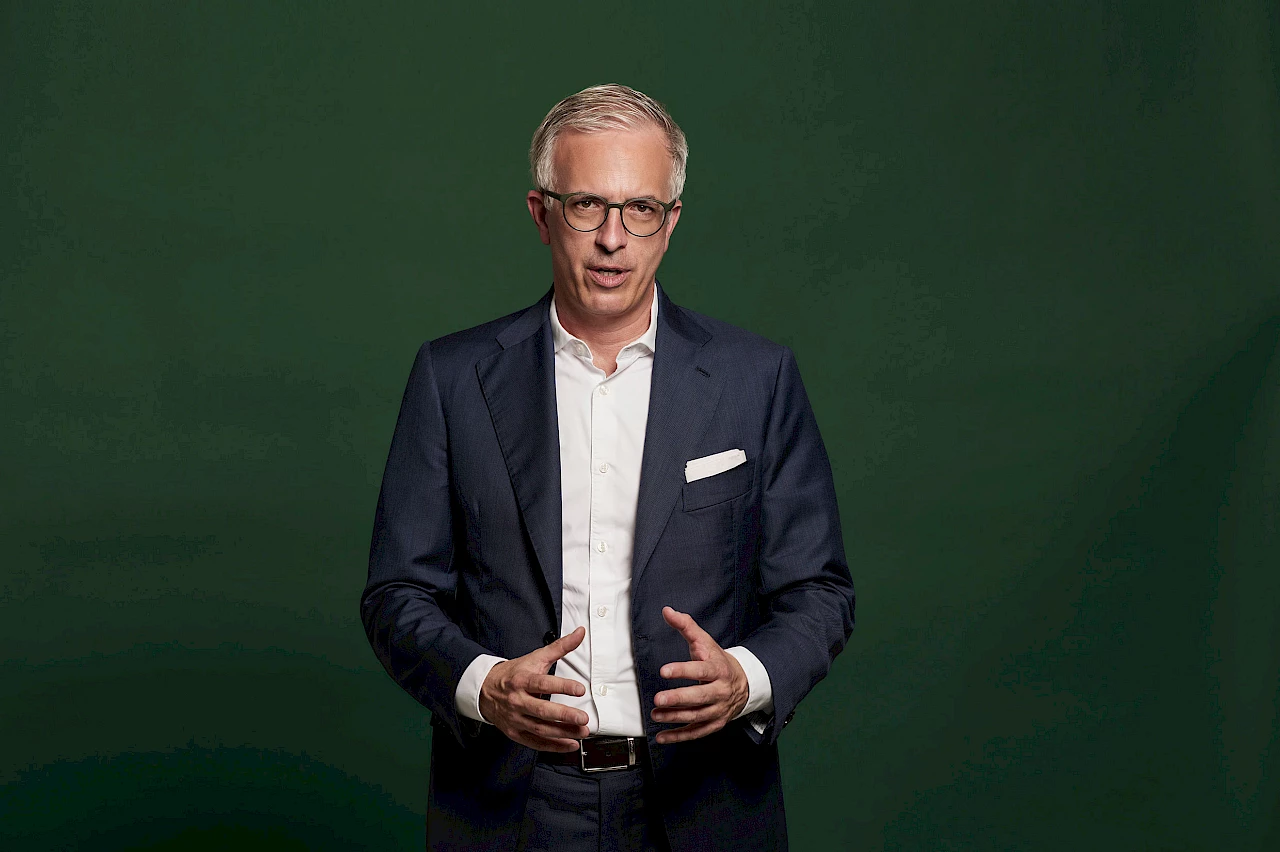
Dr Daniel Dettling is a futurologist and founder of the Institute for Future Policy (www.institut-zukunftspolitik.de). The institute recently published the book “Eine bessere Zukunft ist möglich – Ideen für eine Welt von morgen”.
Cover photo: Dr Daniel Dettling (Photo: Laurence Chaperon)