

 IBA editorial team
 With Brucity, the city of Brussels has created a new administrative centre that goes far beyond the traditional function of a city hall. The building brings together numerous previously dispersed municipal services in one central location and combines modern workplaces with public accessibility, sustainability and architectural openness. In the heart of the Belgian capital, a project has emerged that demonstrates how public administration can be spatially organised in the 21st century.
A new centre for the city administration
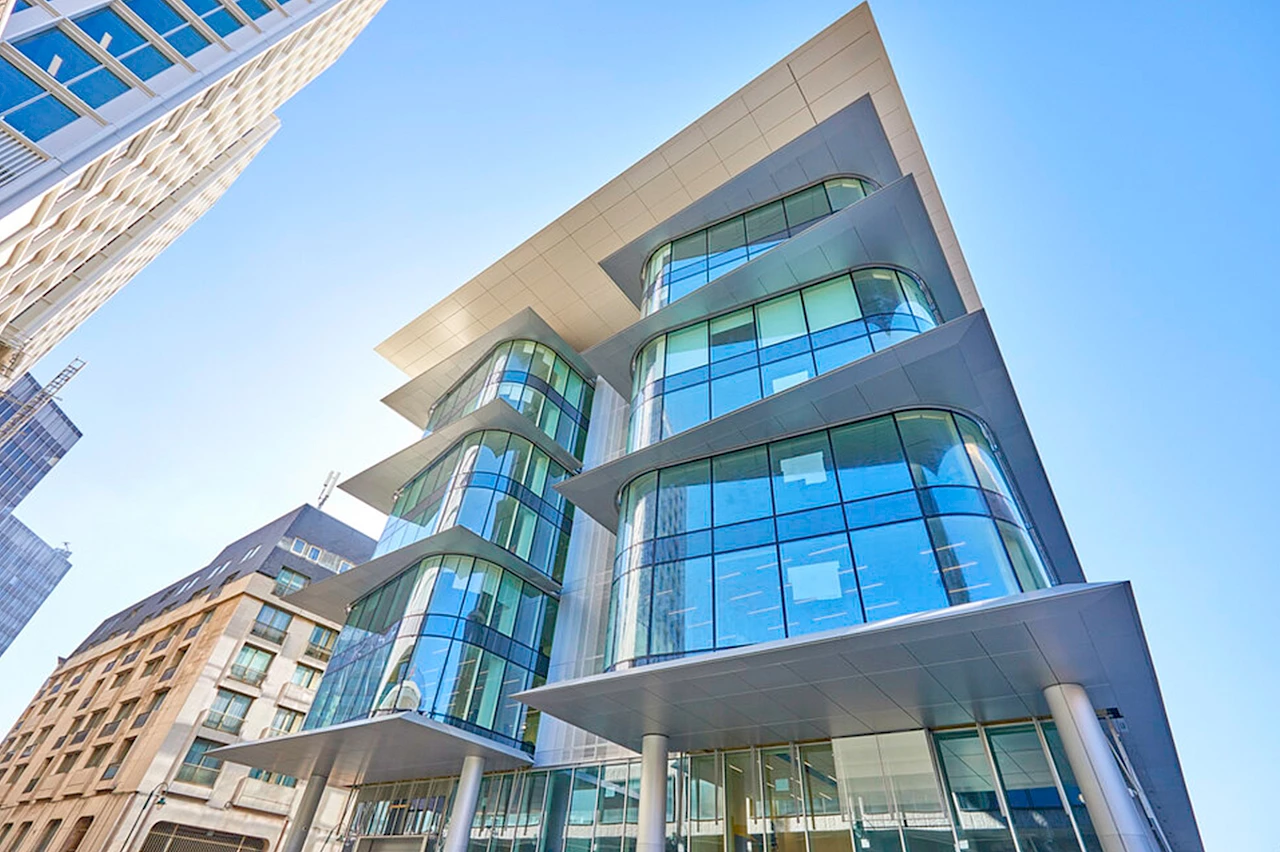
Brucity was developed to consolidate various municipal administration sites across the city in one location. The aims were to simplify internal processes, shorten journeys for citizens and at the same time create a contemporary working environment for around 1,700 employees. The new building, with approximately 37,000 square metres of space, stands on the site of the former Parking 58, in immediate proximity to the historic city centre. As a result, it assumes not only an administrative role but also an urban one. The building represents an administration that seeks to move closer to people and presents itself as open and service-oriented. Generous entrance areas, clear circulation routes and public zones are designed to improve orientation and accessibility.
A GLIMPSE OF brucity:


Architecture between city and organisation
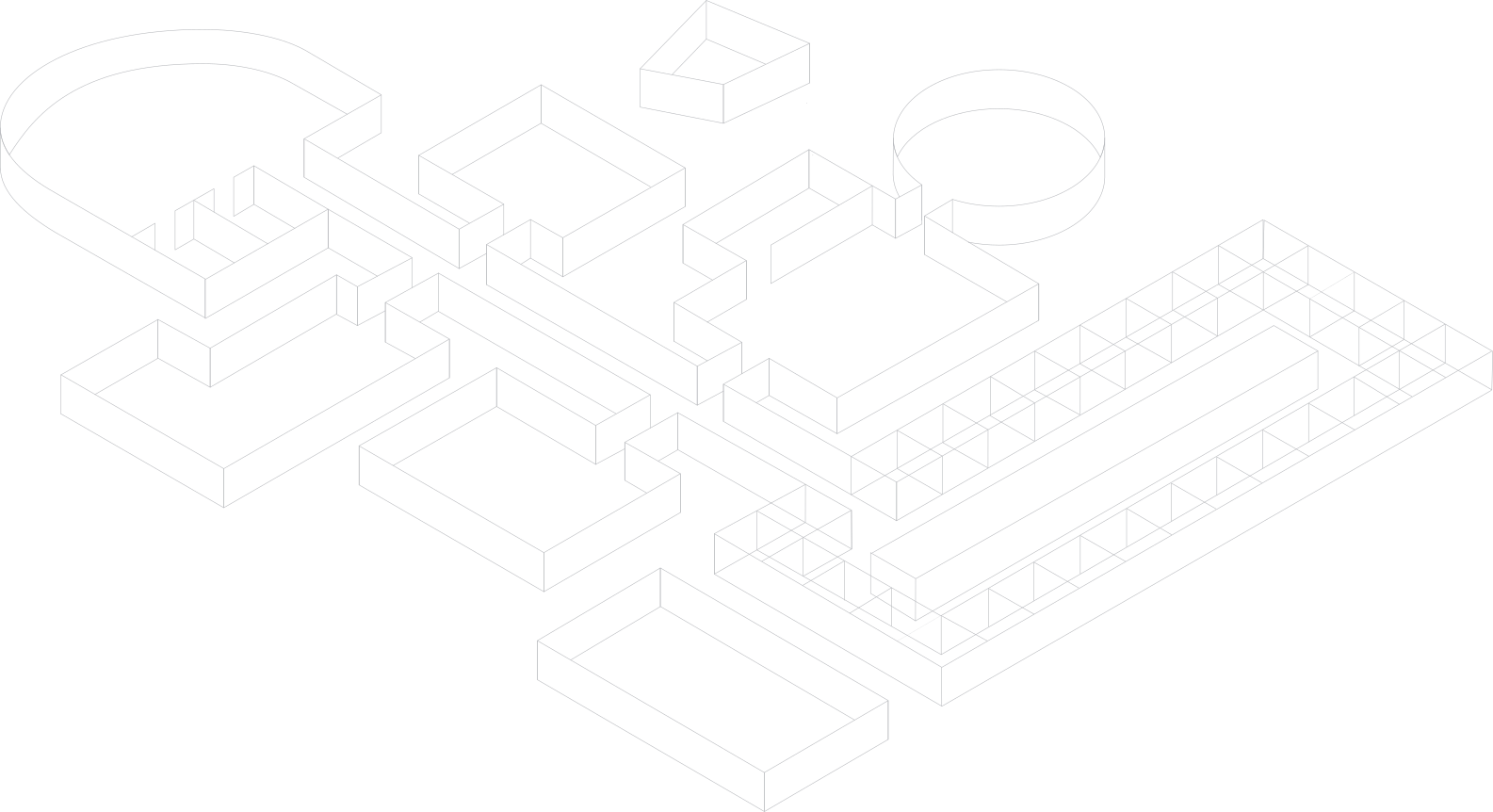
Architecturally, Brucity combines urban presence with openness. The glass façade and central atrium symbolise transparency and provide insight into democratic processes. At the same time, the vertical structure makes efficient use of the limited inner-city footprint and creates a variety of zones across several levels from citizen contact and service areas to office floors, the council chamber and a roof terrace. Inside, bright spaces, open sightlines and transparent transitions shape the interior. This creates an atmosphere that supports both citizen engagement and professional workflows. Particularly relevant is the combination of two functions that have traditionally been separated in many public administration buildings: public services for citizens and internal collaboration within the administration.
Modern workplaces for public administration
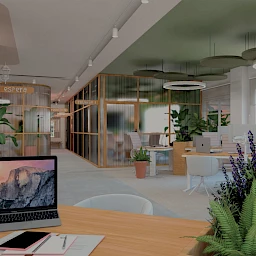
The requirements of administrative work are changing. Digital processes, hybrid collaboration, interdisciplinary teams and rising service expectations mean that traditional cellular offices are increasingly reaching their limits. Brucity responds with a flexible workplace strategy. Different work zones enable focused tasks as well as project work, spontaneous exchanges and confidential discussions. Traditional office workstations are complemented by meeting areas, retreat rooms and collaborative spaces. In doing so, the project follows a trend that is no longer limited to private-sector companies: public organisations also require workplaces that are productive, attractive and adaptable.
Furnishing as part of the overall concept
Furnishings play a key role in this context. Pami was involved in the Brucity project both as a workspace designer and as a manufacturer of office and contract furniture – a combination that was of central importance to the project. As a Belgian supplier with its own production facilities, Pami was able to manufacture the furniture locally whilst also delivering bespoke solutions in line with the specifications set by the city and the architects. The proximity of design and production made it possible to control quality, sustainability and delivery times whilst still implementing highly customised solutions.
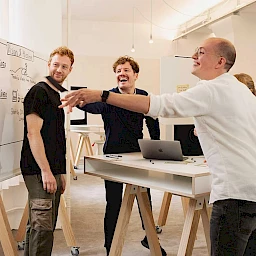
The project is an example of co-creation: the workstations were developed in close collaboration with the architectural team, and the sit-stand concept emerged from direct dialogue between the architects and Pami’s R&D department. This allowed the architectural vision to be translated into a scalable, operationally viable solution with modular elements that integrate into the overall concept and support different usage scenarios. The furniture was developed in coordination with the architecture, usage concept and operational processes. Ergonomic workstations, flexible meeting solutions, storage concepts and shared spaces interlock and support different ways of working. Particularly in projects of this scale, the furniture influences not only comfort but also acoustics, space efficiency and the daily user experience.
Sustainability as a design principle
Brucity was realised as a passive, energy-efficient building with a BREEAM ‘Very Good’ rating, thus meeting high sustainability standards. Energy efficiency, resource conservation and durability played a major role right from the planning stage, both in construction and in the fit-out. The City of Brussels aimed to apply circular principles to the furnishing and reuse existing resources wherever possible. Parts of the existing furniture were refurbished and repurposed, whilst others were supplemented with durable, low-maintenance solutions. To achieve this, Pami combined its own sustainable, circular products with carefully selected partner solutions to create a harmonious and functional working environment. In this way, the furnishings make an important contribution to the building’s overall performance – particularly in the high traffic public areas, where sustainability targets are increasingly being enshrined in public procurement law and tender specifications.
Administration as a service destination
One of Brucity’s defining features is the new role of the administrative building as a public destination. Citizens do not enter a conventional municipal office, but a modern service environment with clear orientation and a contemporary atmosphere. This also changes the perception of administration: spaces send signals and can communicate openness, professionalism and reliability. Many cities and municipalities across Europe are currently facing similar questions: How can dispersed administrative locations be consolidated? How can public buildings be used more efficiently? What kinds of workplaces does modern administration require? How can sustainability be combined with service quality and economic efficiency? Brucity provides practical spatial and organisational answers to several of these questions and therefore has significance beyond Belgium.
Conclusion: When public spaces shape the future
Brucity in Brussels is a project that exemplifies a new generation of public buildings. It combines administration, workplace design, sustainability and community engagement within a cohesive architectural framework. The furniture supplied by Pami supports this concept with functional, durable and ergonomic solutions. These fit seamlessly into the building’s overall strategy whilst demonstrating the added value of combining workspace design, local manufacturing and co-creation with the architecture. The project makes it clear that when architecture, organisation and furnishings are conceived together, the result is spaces that achieve more than mere use of floor space. They create better working conditions and improved services and, ideally, strengthen the relationship between the city and its people.