

 IBA editorial team
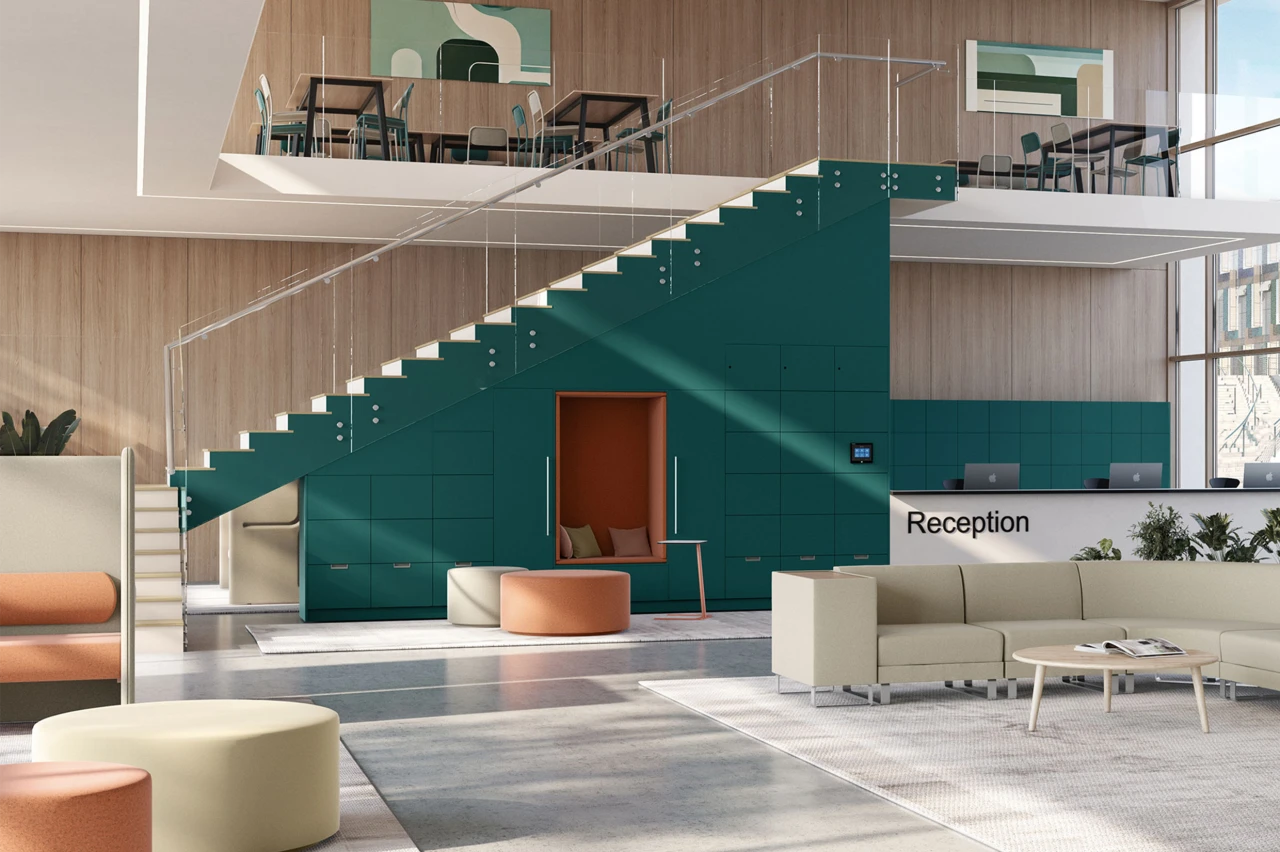
 For years, discussions on the future of work have revolved around hybrid models, workplace concepts and efficiency. Yet the real paradigm shift is taking place elsewhere: employees now expect more from the office than simply a functional place to work. They are looking for an environment that fosters a sense of belonging, supports their wellbeing and provides services that make everyday work easier. In short, the office is evolving into a place of hospitality.
What office users really expect today
The Office User Monitor 2025 – a study initiated by Drees & Sommer, WISAG, STRABAG and Art-Invest on the needs of office users – illustrates just how significantly expectations of office environments have changed. Around 230 office employees and HR professionals from various sectors were surveyed. The findings make one thing clear: users want an office that feels more like a comfortable living environment than a traditional workplace, with a variety of settings ranging from café-style areas and homely spaces to zones for focused work. For 86% of respondents, such differentiated environments are essential for both productivity and wellbeing.
Further research supports this trend. A study conducted by the Technical University of Darmstadt in cooperation with the German Property Federation (ZIA) concludes that, despite widespread home-working options, the office remains a vital place for social interaction, creativity and informal collaboration. Employees are increasingly choosing where to work based on where they feel most productive and connected, rather than solely on organisational requirements. As a result, the office is gaining importance as a place of encounter, community and identity.
Why spaces must reduce mental load
At the same time, pressure on employees continues to grow. Recent analysis of mental health in the workplace show that psychological illnesses are now among the most common causes of sickness absence. Reports from health insurers and data from the German Federal Institute for Occupational Safety and Health (BAuA) indicate that the number of mental health-related absence days has risen significantly over the past decade, while the average duration of such absences remains higher than for many other illnesses.
A similar picture emerges across Europe. According to the OSH Pulse 2025 of EU-OSHA g29% of employees across the EU report experiencing stress, depression or anxiety at work. Around 40% report working under considerable time pressure, while a significant proportion cite lack of recognition, unclear expectations and poor collaboration as major stressors. The ifaa-Trend Study 2026 on Mental Health in the Workplace further reveals that 71% of surveyed organisations now recognise psychological strain as a relevant issue, although many still see a need for action in prevention and workplace design.
Research in occupational psychology clearly demonstrates that both spatial and organisational conditions play a crucial role. Stress is often caused by noise, a lack of retreat spaces, constant interruptions, unclear structures and a perceived lack of control over one’s working environment. Conversely, well-designed spaces, clear rules and supportive services can significantly reduce psychological strain and enhance overall wellbeing.
Learning from hospitality principles
A look at the hospitality sector shows how consistently spaces are designed from the user’s perspective. Studies on hotels and serviced apartments describe how spatial quality, intuitive wayfinding, seamless processes and service offerings work together to create a coherent guest experience. This is about far more than design alone; it is the interplay of atmosphere, services, processes and mindset.
The transfer to office environments is obvious. As highlighted in various „State of Hybrid Work“-Studies, when people invest time and effort in travelling to the office, they expect the experience to be worthwhile. An office conceived as a hospitality destination delivers exactly that. It creates a sense of welcome, makes navigation effortless, offers choice for different activities and extends the traditional workplace with services that reduce everyday burdens.
This includes not only spatial elements such as zoning, acoustics, lighting and furnishings, but also digital booking and information systems, community management services and programmes focused on movement, nutrition and mental wellbeing. Together, these elements help ensure that the office is not perceived as another source of stress, but rather as a place that provides structure, facilitates meaningful interaction and allows for moments of recovery.
Design recommendations for the office
In practice, transforming the office into a hospitality experience is a strategic challenge for architects, interior designers, manufacturers and organisations alike. Studies such as the Office User Monitor 2025 show that users increasingly value high-quality, differentiated environments that accommodate a variety of activities and moods. At the same time, research into workplace mental health highlights the importance of retreat spaces, predictability and a sense of control for maintaining psychological wellbeing.
Organisations that take these findings seriously create workplaces that make identity and culture visible, bring teams together intentionally and respect individual needs. Applying hospitality principles to the office means putting people at the centre designing transitions deliberately and treating space as a service offering – with the goal of supporting performance, creativity and health in equal measure.
Event tip:
From 27–30 October 2026, ORGATEC in Cologne will once again become a platform for exploring the future of work. As an integral part of the trade fair, the Wherever Whenever – Work Culture Festival will take place for the second time. The festival offers forward-looking insights, proven best practices and practical solutions to the challenges shaping today’s working world. The programme includes talks on workplace design, hospitality and mental wellbeing. A strong practical focus is created by closely integrating the festival programme with the exhibition stands of ORGATEC exhibitors, showcasing the potential of space, furniture, technology and flexible, sustainable workplace design. Plan your visit now!
For further information about the WW-Festival visit https://iba.online/festival/en/.
Cover photo: Bisley