


 Sven Mylius
 For a long time, the office was the central hub for knowledge work. Today, mobile working has become the norm for many employees. They value the flexibility it offers and the improved work-life balance. The downside is vacant office space, unused workstations and empty desks. In the Drees & Sommer Workspace Benchmark Report 2023, more than half of respondents reported workplace utilisation rates of 50 per cent or less, while 63 per cent expected to reduce their office space in future. As companies consolidate office space, many are asking the same question: How can we create an office that acts as a magnet for employees?
less space, more flexibility
According to the latest economic survey by the ifo Institute, around 24 per cent of employees in Germany worked from home at least some of the time in February 2026. In some areas of the service sector, such as IT services, the figure was even higher, at more than 75 per cent¹. As early as 2023, 98 per cent of respondents to the Drees & Sommer Workspace Benchmark Report agreed that mobile working would remain an established part of the world of work. Some 63 per cent expected the amount of space required per workstation to decrease, with the majority anticipating a reduction of between 21 and 30 per cent. Meanwhile, 82 per cent were already using desk sharing within their organisations – 16 percentage points more than in the previous year’s survey and a significant increase compared with 2021, when the figure stood at just 52 per cent.
¹ Working-from-home rate remains stable at just under 25 per cent | Press release | ifo Institute

Trading space for quality
Unused office space is expensive, and many companies have already responded. For example, two or more separate offices in secondary locations may be given up and consolidated into a smaller office in a prime location, creating a more attractive workplace. The survey findings reinforce the importance of the office as a modern working environment that is not only functional but, above all, supports social interaction and collaborative work. Key reasons for coming into the office include direct communication with clients and colleagues, formal and informal meetings, and teamwork.

New Spatial Solutions Enabled by Artificial Intelligence
For this to succeed, working environments must provide optimal support for a variety of tasks and continuously adapt to new forms of collaboration. This is facilitated not only by hybrid working models, but increasingly also by digital technologies and artificial intelligence. Those who make greater use of voice assistants, AI applications or virtual meeting tools in their day-to-day office work need suitable quiet spaces where they can concentrate, as well as rooms with well-designed and, above all, good acoustics for undisturbed interactions. For example, so-called ‘prompting zones’ could be incorporated into the workspace for users of voice input, enabling them to prompt others whilst surrounded by like-minded colleagues.
Increasingly important: health and wellbeing
Health and wellbeing are also becoming increasingly important. Employees are looking for working environments that support their health and wellbeing – from flexible working models and the architecture and design of spaces to leadership, communication and organisational culture. These factors are closely interconnected and form the basis of a healthy and productive working environment. Some 82 per cent of respondents considered health and wellbeing to be important or very important for the future. At the same time, companies were not yet addressing the issue sufficiently in their leadership and corporate strategies. Concrete figures are needed to demonstrate the importance of health and wellbeing to senior management. A Health and Wellbeing Scoring system, for example, can be used to measure less tangible factors such as health and wellbeing and link measures designed to improve them with business metrics such as productivity, staff turnover and employee retention.
Younger generations expect flexibility, well-equipped workplaces and culture
One of the most significant changes in the world of work is the arrival of the next generation in the workplace. Younger employees bring their own perspectives and a distinct set of expectations regarding employers and office concepts. Alongside greater flexibility and desk sharing, these include identification with the workplace, diversity and team building. Some 38 per cent of respondents had already seen changes to their office concepts as a result of the younger generation or expected such changes in future. Companies that prioritise flexibility, high-quality workplace environments and culture are among the frontrunners and can strengthen their attractiveness as employers to younger and prospective employees.
Awareness of new work is growing
Overall, awareness of the changing world of work is increasing. Some 91 per cent of respondents considered it highly relevant to have a strategy for the future use of New Work spaces. Of these respondents, 45 per cent had already developed a complete strategy aligned with their overall corporate strategy. Even as other places complement the office as a place of work, the office itself has a future. What matters is not the amount of space, but above all its quality and location. The office of the future becomes a magnet for employees through genuine added value, voluntary attendance and intrinsic motivation. An attractive, needs-based, technologically optimised and healthy working environment strengthens employees’ connection to the office – and, in turn, to the organisation.
about the Workspace Benchmark Report 2023:
A total of 181 people from different companies and around 20 different industries took part in an anonymous survey conducted in August and September 2023. Of these, 37 per cent worked for companies with more than 1,500 employees, 31 per cent for medium-sized companies with between 201 and 1,500 employees, and the remaining 32 per cent represented smaller companies with between 50 and 200 employees. Some 80 per cent of participants worked in the automotive, industrial, information and communication technology (ICT), public administration and real estate sectors. The Workspace Benchmark Report is available to download from the Drees & Sommer website: https://www.dreso.com/de/workspace-benchmark-report.
New Benchmark Report available from October 2026
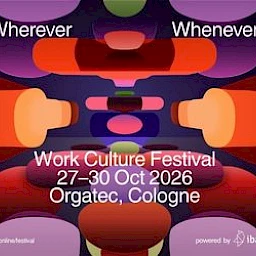
The results of the new Drees & Sommer Workspace Benchmark Report will be published in October 2026 and presented at the Work Culture Festival 2026 as part of ORGATEC.
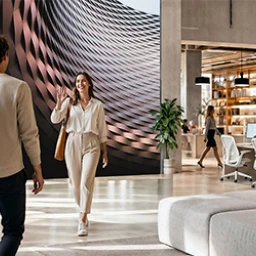
Impressions taken from the Drees & Sommer offices: