


 IBA editorial team
 The question of what keeps people engaged, inspires them and makes them want to return time and again is one that companies seeking to develop their work culture and work environments are also asking themselves today. It is worth looking to sectors that have always focused on people’s well-being, service quality and genuine relationships. The hospitality industry is undoubtedly one of them.
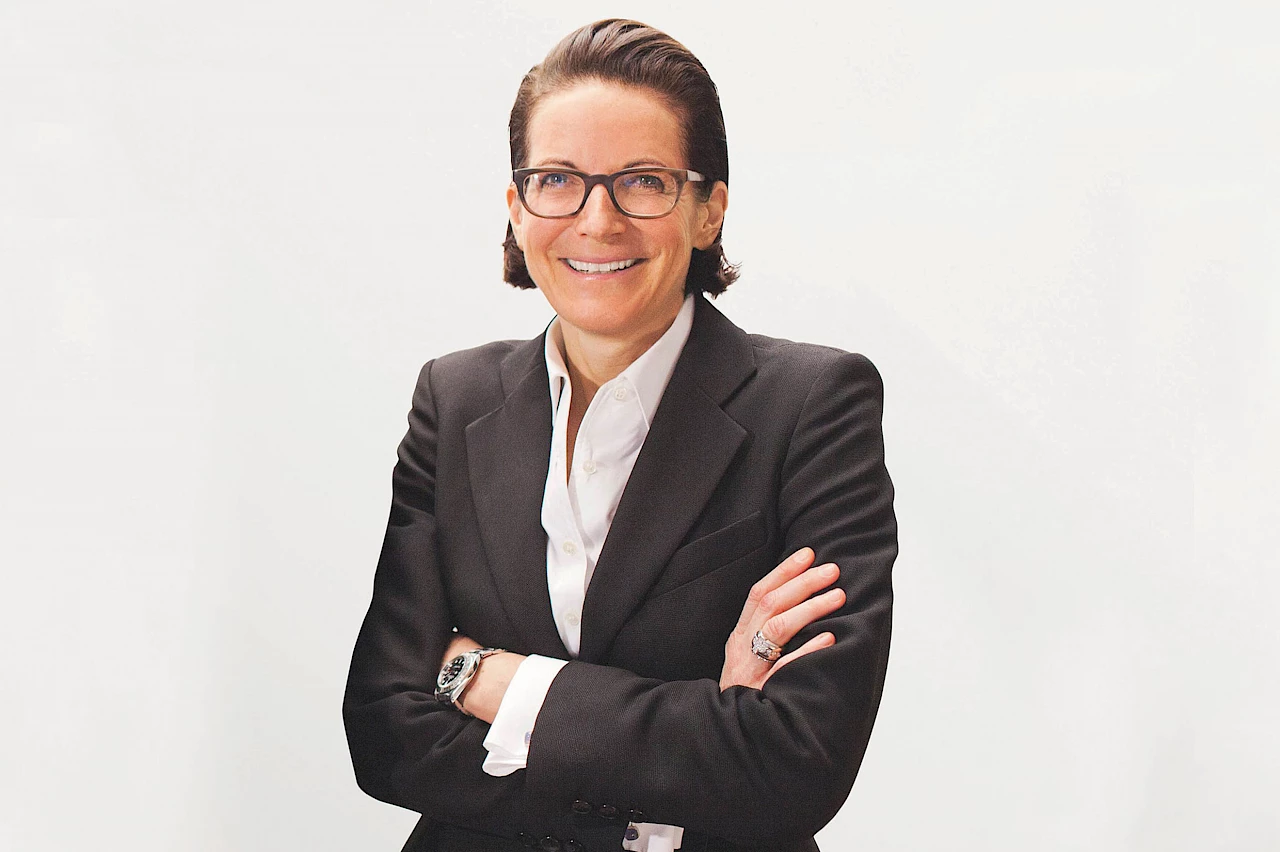
Dr Caroline von Kretschmann, managing partner of the Europäischer Hof Heidelberg and a multi-award-winning hotelier, has for years championed a form of corporate leadership that puts people at the centre. At the Wherever Whenever – Work Culture Festival, she will discuss how hospitality can become a mindset and why genuine relationships, trust and lived values form the basis for successful organisations. Particularly in times of transformation, skills shortages and growing uncertainty, these qualities are becoming increasingly important far beyond the hospitality industry.
Back in 2023, we spoke with Caroline von Kretschmann about what companies can learn from the top tier of the hospitality industry, the role spaces play in well-being, and why genuine hospitality always begins with a mindset. The conversation is more relevant today than ever.
Ms von Kretschmann, the Europäischer Hof Heidelberg is a five-star grand hotel that has been run by the same family for four generations. Not only the guests but also the employees appreciate the special atmosphere of your hotel. What’s the key to your success in producing happy guests and satisfied employees?
People tell us again and again that you can feel that here at the Europäischer Hof Heidelberg our heartfelt desire is to provide moments of happiness for everyone who sets foot in our hotel. This begins with our employees, is conveyed to our guests, and extends even to the mailman and the taxi driver. We are not a grand hotel in which people are petrified with awe. On the contrary, this is a place where people can laugh out loud, weep, argue, be joyful, and be themselves. What defines us is the individual spirit of our hotel, our very special team, an outstanding and authentic warmth, an empathic and value-oriented corporate culture and a management culture that focuses on service. At our hotel, people can become part of a force field of emotional and social energy. They often experience a sense of security, support and well-being. We are motivated by a higher mission that goes far beyond economic concerns.
What can offices learn from the high-end hotel business, and how can the office become a place of hospitality?
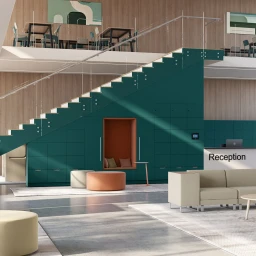
The question is whether an office should become a place of hospitality—or, more likely, whether it should be true to its function and become a space where the employees feel comfortable, secure, inspired, energised and ideally supported in their respective work and their individuality. It’s undeniable that spaces have an effect on people’s sense of satisfaction and well-being. If offices could adopt something from the high-end hotel business, it might be the mission of finding out what individuals need in terms of space and filling these spaces with joy. And of course that includes everything: the structure of the room, the materials, the lighting, the scent and possibly even music. Incidentally, we’ve subjected the entire hotel to an energetic cleaning. In other words, we’ve located water veins and underground fault lines and neutralised them. The feedback we’ve received from our employees and our guests is very positive.
What skills are required for the role of a hostess, and what, in your opinion, are the biggest challenges for good hosts?
In my opinion, the basic requirement for good hosts and hostesses—as well as for good managers, incidentally—is a liking for people and a desire to prepare beautiful moments for them. That means having helpful skills such as empathy, creativity and good taste. For me, the biggest challenge, as well as the most intriguing one, is the fact that every guest is unique and has individual wishes that he or she wants to have fulfilled. As a result, it’s also a good thing if hosts and hostesses regard courteous service as a gift, if they can deal with the extreme variability and the complexity of the human psyche, and if they have a sense of humour. That’s because a hotel is a stage on which everything that life has to offer is played out, and it’s a well-known fact that if you want to deal with life successfully, a sense of humour is essential. We know that special service of this kind is not the result of a set of rules but the expression of an inner attitude. Finally, and especially if you’re a hostess or a host, you have to love what you’re doing. Incidentally, “We love what we do” is our management creed. Our goal is to assign each one of our employees to the place in our company where they love what they’re doing. In our experience, in most cases this automatically results in pleasure, enthusiasm, satisfaction and success.
For more than 150 years, you’ve provided your guests with a heartwarming temporary home. Has it been hard to maintain this level of quality over such a long period of time? And with regard to the office as a place of hospitality, which approach to furnishings would you recommend: following current trends or orienting yourself to the history of the company?
It’s certainly a huge challenge to maintain the high quality of a five-star hotel over a long period of time—not only in economic terms but also at the emotional level. We have to deliver a top performance 24 hours a day on 365 days a year. That requires a great deal of discipline, enthusiasm, dedication and innovation. Some aspects of the concept of quality change over time. Even though we are traditional hotel, we need to continuously develop—to preserve and expand the aspects that have stood the test of time, while at the same time always questioning and changing many things. And that applies to every area, ranging from the design of the hotel spaces and rooms to food presentation and particular standards of service. We never merely follow a trend or a spirit of the times. We closely observe what goes on around us, and if an aspect of our hotel receives a positive response we follow it up and try to carefully bring about the necessary change.
Ms von Kretschmann, thank you for the interview.
Dr Caroline von Kretschmann is Managing Partner of the five-star superior hotel Europäischer Hof Heidelberg and a recognised voice for values-based leadership in German-speaking countries. The historic hotel has been family-owned for more than 160 years and is now led by her in its fourth generation. Since 2013, she has shaped the Europäischer Hof with a clear strategic direction and a distinctive, values-based corporate and leadership culture. Her professional career began with a banking apprenticeship at Deutsche Bank in Frankfurt. She then studied business administration at the University of St. Gallen (HSG), where she also completed her doctorate. She subsequently spent more than 15 years working as a strategy and organisational consultant, including ten years in her own consultancy. Together with Melanie Frowein, she also co-founded DUE CONSULTANTS, a consultancy focused on systemic consulting and succession in family-owned enterprises.
Cover photo: ©Caroline von Kretschmann