


 IBA editorial team
 Artificial intelligence is currently transforming not only processes, but also the way people work, make decisions and collaborate. Yet many workplaces are still designed for a world of work that is gradually disappearing. Architectural psychologist and workplace strategist Manuela Lieber explains why the AI transformation is also a spatial transformation and what requirements future work environments will need to meet.
Ms Lieber, you argue that many offices today are neither AI-ready nor human-ready. What do you mean by that?
Many organisations are currently investing heavily in AI technologies while continuing to work in environments that are designed neither for focused thinking nor for collaboration between humans and AI. For me, being AI-ready means enabling people to move seamlessly between focused work, dialogue with AI systems and collaborative decision-making processes. Being human-ready means creating work environments that take people’s neuropsychological needs into account – including safety, orientation, belonging and the ability to concentrate. The problem is that most offices today fulfil neither of these requirements. They were designed for administrative screen-based work. While the nature of work is changing fundamentally, our workplaces often are not.
What changes are you already observing in everyday work as a result of AI?
The biggest change is that work is becoming more conversational. People are no longer simply entering information into systems. They are talking to AI applications, developing ideas together with them, reflecting on outcomes and making decisions based on new forms of input. This creates entirely new demands for work environments. There is more speaking, more discussion and more collective thinking. At the same time, the volume of information continues to increase, making attention one of the most valuable resources of all. In addition, AI is increasingly taking over routine tasks. What remains for people are above all the more demanding activities: evaluating, prioritising, deciding and taking responsibility. These tasks require environments with a high level of cognitive quality. AI acts as an accelerator. Good work environments become more effective, while poor ones become problems more quickly. If focus rooms are already lacking today, collaboration areas are not functioning properly or technical infrastructure is not aligned with modern ways of working, these shortcomings will become even more apparent in the age of AI. As a result, we will need less space devoted to purely administrative activities and more spaces for deep work, human-AI collaboration and high-quality collaboration.
What role does architectural psychology play in this context?
Architectural psychology explores how spaces influence the way we think, feel and behave. Spaces affect us even when we are often not consciously aware of their impact. Lighting, acoustics, materials, colours and spatial proportions all influence stress levels and, consequently, our performance. In the age of AI, this knowledge becomes even more important. As demands on our attention and cognitive performance increase, we need a better understanding of which environments support people and which unconsciously place additional strain on them. The key question is therefore no longer simply: Which technology are we using? It is also: Under which spatial conditions can people truly realise their potential.
Where do you see the biggest shortcomings in today’s offices?
Many offices are designed neither for focused work nor for genuine recovery. Particularly problematic are constant interruptions caused by poor acoustics, a lack of spaces for retreat and monotonous, low-stimulus environments. There is also a planning mistake that I frequently observe in organisations. Office space is often assessed primarily in terms of square metres, occupancy rates or furniture. The more important question should be: What activities take place here, and what conditions do people need in order to perform them successfully? This perspective is often missing.
What will a successful AI office look like in five years’ time?
A successful AI office will not necessarily be recognised by having more technology. Rather, it will be a place where people can think, decide and collaborate more effectively – both with other people and with AI systems. It will provide activity-based work environments for different needs while consistently taking neuropsychological factors into account. Even in the age of AI, the human brain remains a biological system. It responds to stress, sensory overload and interruptions in exactly the same way as it does today. Organisations should therefore not start from tasks alone, but focus more strongly on people and their needs. Work environments must accommodate different personality types, organisational cultures, ways of working and neuropsychological requirements. The future does not belong to the most technological or the most beautiful offices, but to the most effective ones. Ultimately, it is not the best AI that determines organisational success, but the quality of the decisions people make with its support.
Ms Lieber, thank you for talking to us.

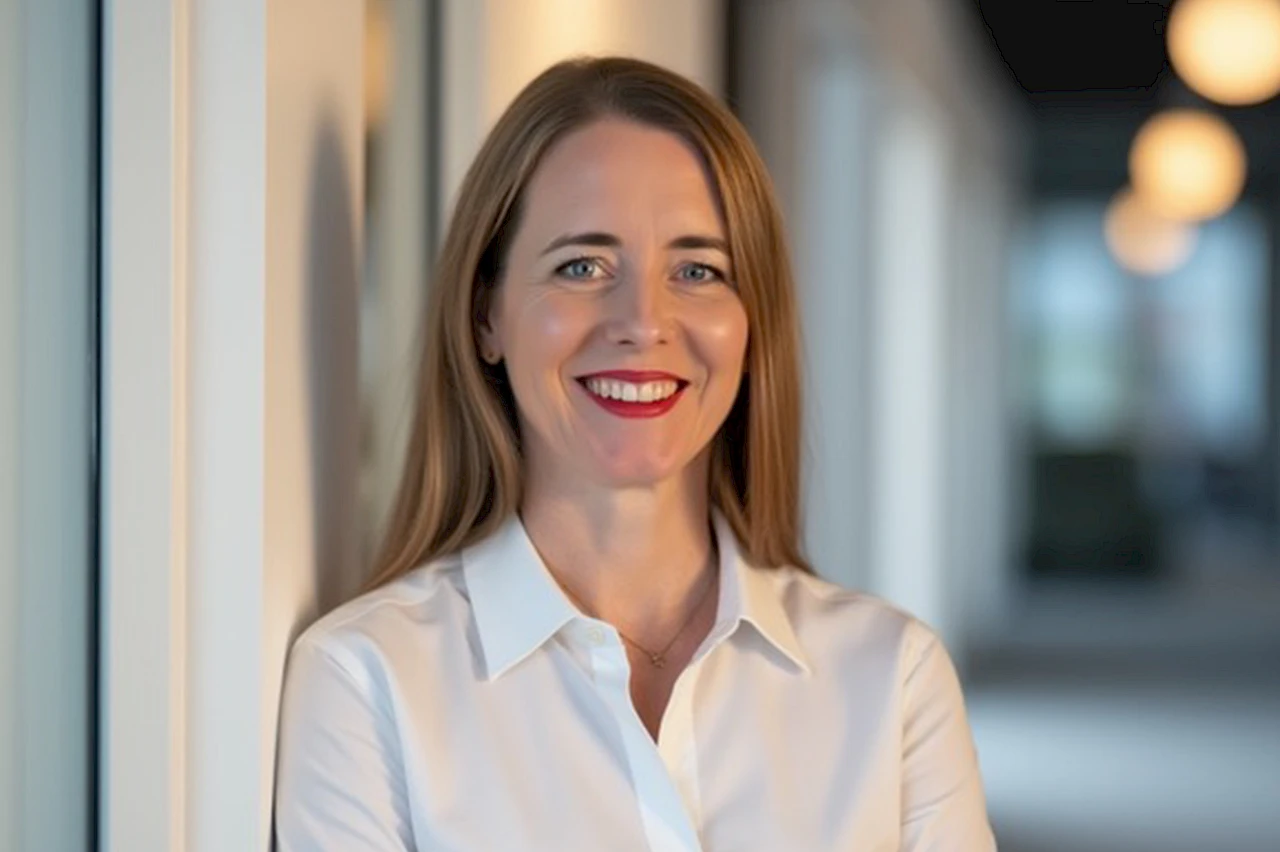
Manuela Lieber is a business economist, architectural psychologist and workplace strategist. She combines experience gained in international organisations with insights from neuropsychology, architecture and organisational development. Her work focuses on how work environments can be designed to enable people to work with focus, health and productivity. At the Wherever Whenever – Work Culture Festival, she will discuss the impact of artificial intelligence on ways of working and explain why many offices today are neither AI-ready nor human-ready.
Cover photo: ©Manuela Lieber