


 IBA editorial team
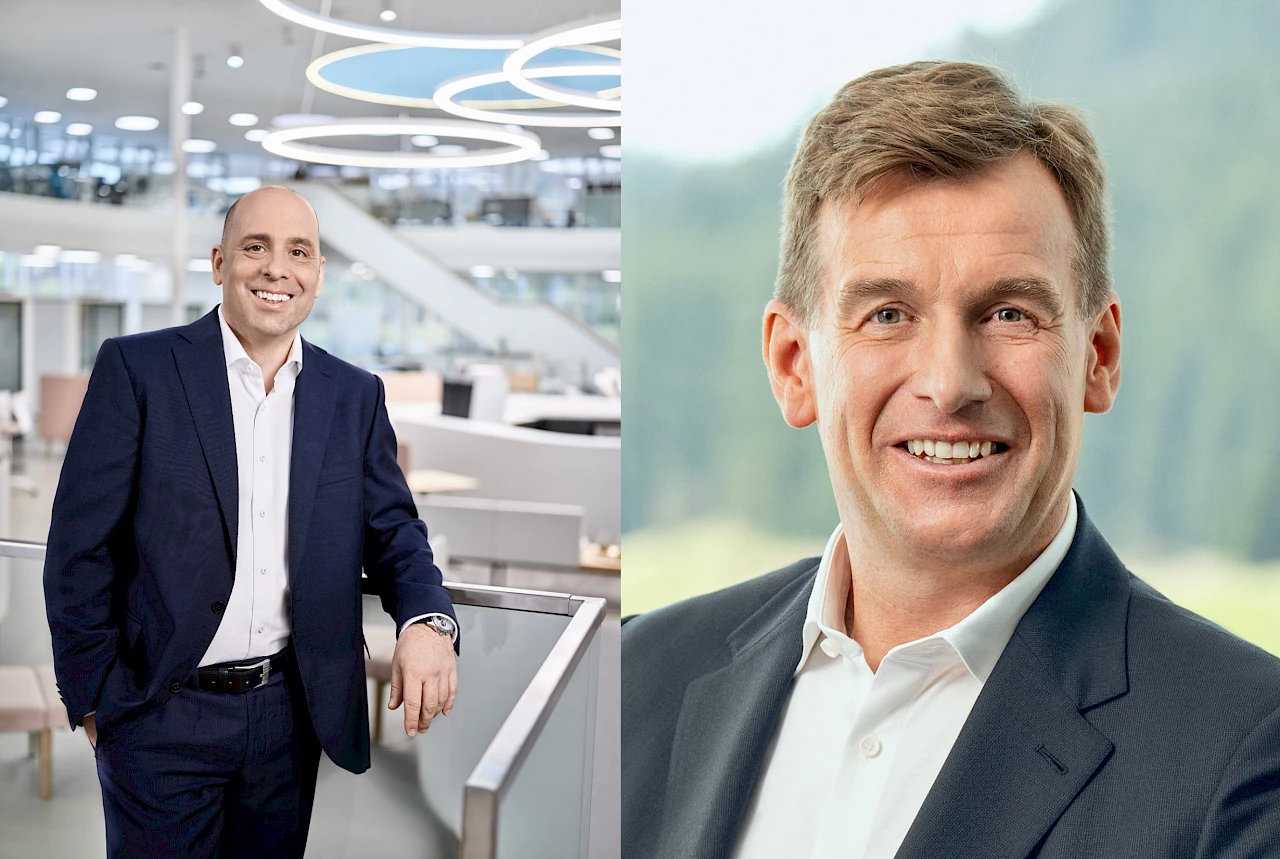
 With newen, the German Interior Business Association IBA has launched an industry-wide infrastructure for managing the end-of-use phase of office equipment. For the first time, the digital platform provides a cross-manufacturer solution for the structured return and reuse of office furniture, thereby establishing a standardised reverse flow. Against the backdrop of increasing requirements relating to sustainability, ESG reporting and product responsibility, newen connects manufacturers, trade partners and companies, enabling the practical implementation of circular economy principles in the office. In this interview, IBA Chairman Helmut Link and Deputy Chairman Daniel Kittner explain why the industry is approaching this project collaboratively, the market trends driving it, and the role newen plays in the IBA’s strategic direction.
Mr Link, Mr Kittner, why is now the right time to systematically address circularity in the office and to establish an infrastructure such as newen?
Helmut Link: For several years, we have observed that the market for used office furniture has been gaining acceptance and becoming increasingly professionalised. At the same time, requirements relating to transparency, traceability and product responsibility are rising – driven by the CSRD, ESG criteria and, looking ahead, digital product passports. These developments will inevitably create pressure for action sooner or later. Rather than waiting for regulation to force our hand, we wanted to develop a joint solution at an early stage.
Daniel Kittner: At the same time, customers are increasingly seeking to combine modern, flexible work environments with a reduced environmental footprint. Circularity in the office means thinking about new planning, take-back and second-life use as a connected system. Until now, there has been a lack of robust structures to support this – and that is precisely where newen comes in: it turns isolated individual projects into a standardised process with clearly defined roles, responsibilities and data structures.
Many large companies could develop their own take-back solutions. Why have IBA members chosen to address this collectively?
Helmut Link: That is precisely what makes this initiative remarkable. Our members could have tackled the issue individually or left it to other market players, such as retailers or facility management providers. Instead, they have consciously opted for a shared industry standard.
Daniel Kittner: From the perspective of manufacturers and the trade, it is clear that circular economy processes only work if they are aligned. A multitude of isolated solutions would increase complexity rather than reduce it. With newen, we are creating a neutral infrastructure in which manufacturers, trade partners and specialised service providers can collaborate on a common basis while still retaining enough flexibility for their own business models.
Which market trends make such a model necessary?
Daniel Kittner: We are seeing “second-life” concepts gaining significant importance, both in the trade and among specialised service providers. Manufacturers who cannot offer a convincing response in this area risk falling behind – both competitively and in tenders. At the same time, extended producer responsibility is gradually becoming the norm. The question of what happens to products at the end of their use is now as much a part of brand management as it is of a sustainability strategy.
Helmut Link: In addition, sustainability is becoming a key selection criterion, particularly in large-scale projects and public procurement. It is no longer sufficient to simply offer a “green” product. What is required are comprehensive concepts that also address how existing furniture is handled when spaces are adapted, locations relocated or offices redesigned.
What exactly does newen provide, and how does it differ from a conventional marketplace?
Helmut Link: newen is not a marketplace where furniture is simply listed and traded. It is a structured reverse logistics system for office equipment. The infrastructure connects manufacturers, trade partners, refurbishers and recyclers, ensuring a clearly defined process and full transparency regarding quantities, conditions and product flows.
Daniel Kittner: A key aspect is that manufacturers remain an integral part of the system. They initially gain access to their own products and can decide whether to take them back or release them into the wider cycle. Products that are not taken back are seamlessly transferred to specialist dealers or partners for reuse – without detours or additional intermediaries. This allows brand management, quality assurance and sustainability to be aligned far more effectively than in fragmented individual solutions.

Who can enter products into newen, and how does the process work in practice?
Daniel Kittner: The starting point is companies that wish to dispose of their existing furniture – in other words, end users who no longer require their office equipment. They register with newen and document their inventory, for example through item lists and images. This information is then made available to participating manufacturers and partners. Manufacturers can identify their products and propose take-back options. In the next step, dealers and specialised service providers can submit offers for further use. Any items that cannot be reused are transferred to professional recyclers, who ensure the highest possible level of material recovery. The platform digitally supports this process from initial inventory to final recycling and documents it comprehensively.
Helmut Link: What has often been a fragmented clearance process becomes a standardised workflow. This reduces coordination efforts for companies and provides reliable data on what happens to the furniture.
What is the main benefit for companies redesigning their office spaces?
Helmut Link: Companies gain an integrated solution instead of having to manage multiple individual components. They can plan new spaces while organising the handling of existing furniture via a single point of contact. This not only simplifies project management but also facilitates documentation and reporting, for example in the context of ESG or CSRD requirements.
Daniel Kittner: At the same time, they gain flexibility. If there is a clear process for systematically returning existing furniture, new concepts for hybrid work, space reduction or relocation can be planned with greater confidence.
What role does newen play for manufacturers, the trade and sales teams?
Daniel Kittner: For sales teams, newen becomes a strategic tool for positioning sustainable office projects. When take-back and second-life use are integrated into the conversation, the focus shifts away from pure product pricing towards circular solution packages. This opens up new opportunities in projects and tenders while supporting customers’ sustainability goals.
Helmut Link: Internally, a standardised, digitally supported process also reduces complexity. When matching, transparency and documentation are handled via the platform, sales and project management teams can focus more on advising clients and designing work environments. Our members are no longer just selling products, but solutions for circular workplaces – and that is precisely where the industry is heading.
How does newen fit into the IBA’s strategic direction?
Helmut Link: For many years, the IBA has been working on circular economy topics, digitalisation and robust sustainability data for the industry. newen is the logical next step. It translates these priorities into a concrete, collective solution that supports our members in their transformation.
Daniel Kittner: You could say that newen is a neutral take-back concept that serves as a common reference point for manufacturers, trade partners and companies. It aligns with the role the association has long played: shaping frameworks and providing guidance in times of transformation.
Helmut Link: Our goal is to make circularity in the office the norm rather than the exception. With newen, we are providing the industry with a tool that brings together the necessary processes, market players and data – laying the foundation for the next stage in the development of office and workplace environments.
Mr Link, Mr Kittner, thank you for the interview.

newen is an infrastructure initiative launched by the Industrieverband Büro und Arbeitswelt e. V. (IBA), creating a shared industry standard for the end-of-use phase of office furniture. It connects manufacturers, trade partners and specialised service providers within a digitally managed process, making take-back and second-life use predictable while providing reliable data for sustainability and reporting. Further information: https://newen-spaces.com/
Cover photo: Sedus, Interstuhl