


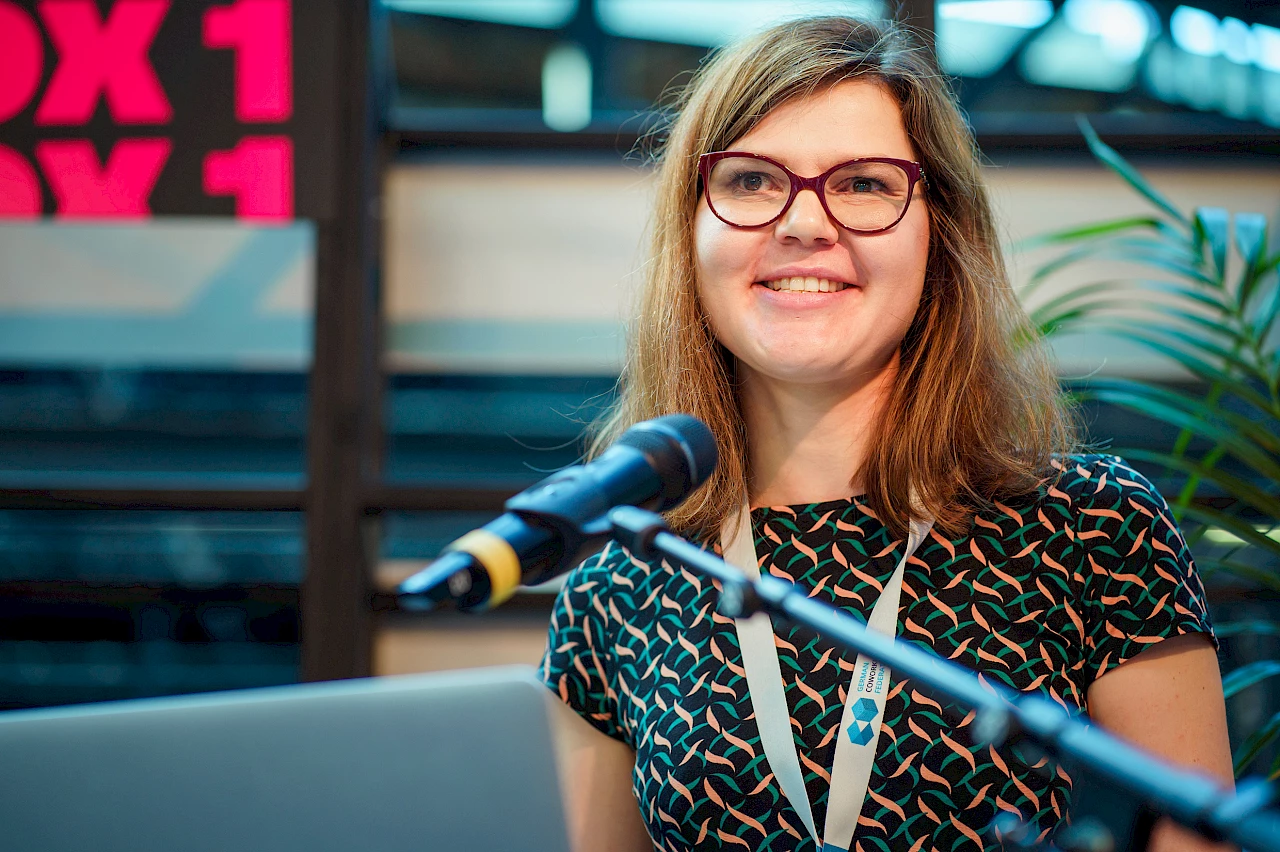
 IBA editorial team
 In many organisations, mobile working is still largely equated with working from home. At the same time, however, alternative work locations are gaining importance, falling somewhere between the corporate office and the private home workspace. Coworking spaces offer professional infrastructure, flexible usage options and social connectivity. In an interview with the IBA Forum, Alexandra Bernhardt of the German Coworking Federation discusses how coworking spaces have evolved, who uses them today and their potential role in future workplace strategies.
Ms Bernhardt, looking back over recent years: where has coworking already had a visible impact on German work culture?
Coworking has primarily contributed to a broader understanding of work as a social process. It is no longer just about a desk or a space, but about exchange, collaboration and learning from one another. Coworking spaces bring together people from different companies, industries and professional backgrounds. This creates dynamics that differ from traditional organisational structures. Moreover, many forms of work that are now widely discussed in companies were first tested in coworking environments, such as flexible use of workstations, differentiated zones for various activities and a more self-directed approach to work. In this sense, coworking spaces have acted as pioneers in many of today’s workplace debates.
The image of coworking as a place for freelancers with laptops persists. What does the reality look like today?
This image is now clearly outdated. While freelancers, entrepreneurs and small teams still use coworking spaces, the user base has become much broader. Today, employees, remote workers, project teams and staff from larger organisations also work in these environments, particularly those who want to work closer to home. Since the pandemic, the number of people seeking flexible working arrangements without relying exclusively working from home has increased significantly. As a result, coworking has become far more diverse.
Has coworking therefore already become part of established workplace strategies?
In some cases, yes, although the extent varies considerably. Larger organisations increasingly include coworking in their workplace strategies, for example as a decentralised complement to the main office, for regional teams or to reduce commuting distances. Among many small and medium-sized enterprises, however, this thinking is still less common. Mobile working is often still equated primarily with working from home. This is precisely where there is further potential, as coworking can offer additional options.
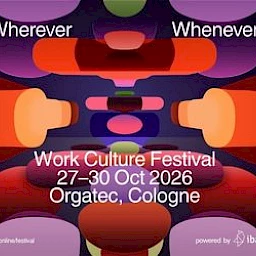
At the Wherever Whenever – Work Culture Festival, you talk about mobile working beyond working from home. What functions do coworking spaces fulfil that home office cannot provide in the same way?
A key factor is professional infrastructure. Not everyone has access to a separate home office, ergonomic equipment or suitable meeting spaces. Coworking spaces typically provide these as standard. In addition, there is the social dimension. Those who work exclusively from home often lack informal exchange beyond scheduled meetings and may experience social isolation. Coworking spaces offer access to a professional and social network. People work independently but remain part of a community, with opportunities to join shared lunches or networking events. Another important aspect is the spatial separation of work and private life. For many individuals, it is beneficial to have a clearly defined workplace and not to permanently integrate work into the domestic environment.
Where do you see the biggest misunderstandings when companies want to integrate coworking into their models?
One common misunderstanding is viewing coworking spaces merely as a fallback or temporary solution. This underestimates their potential. Coworking can be part of a strategic workplace approach alongside the corporate office and working from home. Another misconception is the assumption that coworking works automatically. It requires clear guidelines, suitable target groups and an understanding of which activities are appropriate. Employees need guidance and support when coworking is introduced. Coworking spaces are not a replacement for every office function, but in many contexts they are a valuable addition, whether for workshops and meetings, accessing talent in different regions or enabling employees to work closer to home and reduce commuting.
From a user perspective, what criteria determine the quality of a coworking space?
This depends strongly on individual needs. Some people require quiet and focused environments, while others prefer a more vibrant atmosphere. Fit is therefore a key criterion. Of course, ergonomic workstations, reliable technology, stable infrastructure and suitable retreat areas are essential. However, atmosphere is equally important: do people feel comfortable? Does the work culture suit them? Are there opportunities for interaction? Many coworking spaces offer trial days, which is useful, as quality often only becomes apparent through actual experience.
How important are aspects such as ergonomics, acoustics and furniture in coworking today?
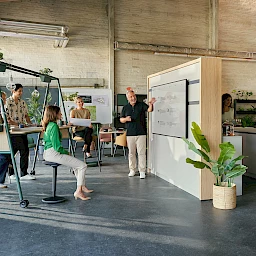
They are far more important than in the early days. The sector has professionalised, and with a broader user base, expectations regarding equipment and working conditions have increased. Ergonomic furniture, height-adjustable desks, acoustic solutions, phone booths and quiet areas are now key features in many spaces. Acoustics in particular play a crucial role in open environments. At the same time, design remains important. Spaces should be functional but also offer a high-quality user experience. This combination of functionality and atmosphere is characteristic of many coworking environments.
Where do you see the most interesting interfaces between coworking, traditional offices and workplace design?
Coworking spaces are valuable learning environments for understanding how flexible workplaces are actually used. They provide insights into how people move between focused work and collaboration, and how community functions in practice. At the same time, traditional workplace planning and the office furniture industry bring strong expertise in ergonomics, space efficiency, acoustics and systematic design. This creates meaningful intersections. Particularly interesting is the question of how to design workplaces that enable both productive work and social interaction.
What topics will the German Coworking Federation focus on in the coming years?
A key focus will remain on exchange within the sector. Like many other work environments, coworking spaces face economic, organisational and strategic challenges. Networking and knowledge transfer therefore remain essential, both internally and externally. Coworking spaces are fundamentally shaped by the people who use them – their communities. In addition, broader political and societal issues are becoming increasingly relevant, such as sustainable mobility, working closer to home, revitalising rural areas and new forms of work-life integration. Coworking intersects directly with many of these topics.
How would you recognise that coworking has truly become part of German work culture?
When coworking is no longer seen as a special case, but as a natural and legitimate option among several workplace choices. And when it is more widely understood that coworking is not just about providing desks, but about creating places for exchange, networking, learning and community.
Mrs Bernhardt, thank you for the interview.
Dr Alexandra Bernhardt is a sociologist of work and an expert in coworking and new workspaces. As a board member of the German Coworking Federation, she is committed to strengthening the coworking community and fostering exchange between research and practice. She is the author of Coworking-Atmosphären, which explores the role of spatial atmospheres in coworking environments. Professionally, she works at the ZeTT – Centre for Digital Transformation Thuringia at Friedrich Schiller University Jena, where she advises organisations on mobile and healthy working and conducts related workshops. Further information: alexandrabernhardt.bio.link
Cover photo: re:publica