


 IBA editorial team
 German offices contain vast quantities of furniture that companies know surprisingly little about. Many businesses have never systematically recorded their furniture inventories. A new EU study (Preparatory study on ecodesign for furniture) estimates that there are at least 800 million items of office furniture across the EU, excluding seating. At the same time, companies are reducing their office space, freeing up furniture that manufacturers and specialist dealers would be keen to take back. Michael Lehnert, CEO of seventhings, explains why the circular economy needs to start with these unrecorded inventories, how technology has made recording them easier than ever, and what manufacturers can do to help.
Mr Lehnert, the office furniture industry has been developing circular products for years – repairable, made from materials that can be separated by type and LEVEL-certified. Where are the remaining obstacles?
The industry has made considerable progress in product design. The foundations for circularity are laid at the factory, but it is the customer who decides whether and to what extent those opportunities are used. In practice, however, we encounter the same problem time and again: many customers have never recorded their furniture inventories. They do not know how many chairs, desks and cabinets they have, where they are located or what condition they are in. Yet these existing inventories offer the greatest potential for the circular economy. The furniture is already there, in offices.
Why are existing inventories particularly important?
Because they contain the furniture that will become available over the coming years. Many companies are reducing their office space because hybrid working has changed their requirements, or because they are consolidating locations. Every relocation or refurbishment releases furniture. It could be returned to the manufacturer, refurbished by specialist dealers or given a second life through a resale platform. From conversations with manufacturers, I know that they are actively looking for used furniture that they can recover and reuse. But there is no central source of information showing what furniture is currently in German offices and when it might become available. As a result, supply and demand often fail to connect, and furniture that is still in good condition is all too frequently disposed of.

The foundations for circularity are laid at the factory, but the decisions are made by the customer. Michael Lehnert, CEO of seventhings

Surely high-quality furniture should be included in a company’s fixed asset register. Why, then, have so few businesses properly recorded their furniture inventories?
It is included in the fixed asset register, that’s true. A premium office swivel chair or conference table exceeds the threshold for low-value assets, so it is capitalised and depreciated over several years. The crucial point is what the register actually contains: purchase value, acquisition date, cost centre and often a single entry covering the furnishings of an entire floor. It does not tell you where individual chairs are today, exactly which models they are or what condition they are in. After the first office move, the register no longer reflects the actual layout. According to KPMG, 18 per cent of assets could not be located during audits in 2024, while Forrester reports that 73 per cent of ERP users maintain parallel Excel spreadsheets. This gap is rarely addressed because the effort involved puts companies off. Traditionally, recording an inventory meant someone walking through every room, noting the model and condition of each item, attaching labels and finally reconciling everything with the fixed asset register. For organisations with several locations and thousands of pieces of furniture, this can keep facilities teams busy for weeks while normal operations continue. As a result, inventory recording is postponed until a relocation or audit makes it unavoidable. For manufacturers, this means that their durable furniture may be listed in customers’ accounts but is not described in sufficient detail to be located again.
How does the process work today?
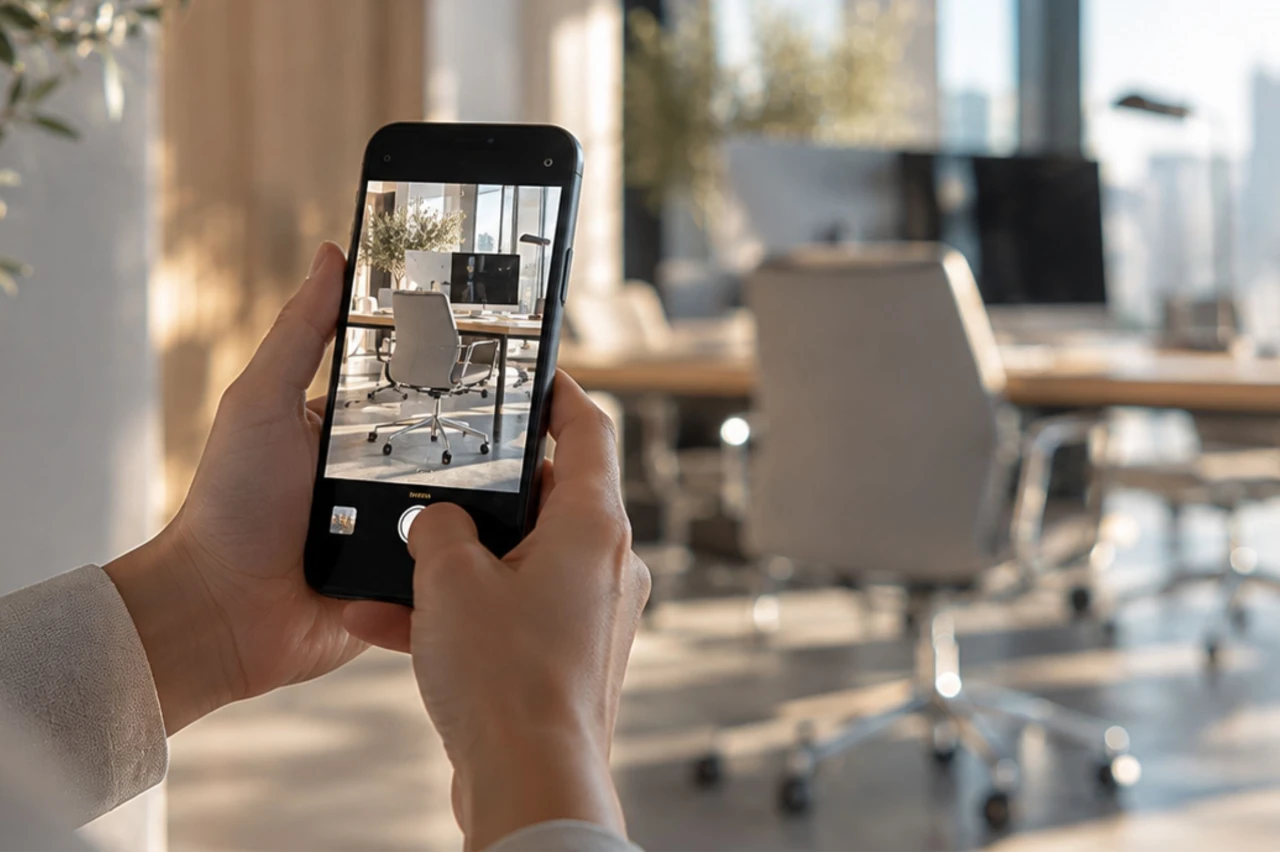
It is much easier now. Someone walking through the rooms can describe the furniture using voice input, take photographs or record a short video. Modern AI analyses these recordings, reads identification labels and turns the information into structured inventory data within minutes, including location, room and condition. Smart mapping links the information to existing data fields. By integrating manufacturers’ catalogues, we can achieve a very high level of data quality. What starts as a one-off inventory exercise can become an ongoing process of maintaining accurate records. We are working intensively to make inventory recording as simple and intelligent as possible. This is the foundation for circular management of existing assets. Customers who do not want to carry out the inventory themselves can outsource the process to our team. Starting with a single location is enough to see what potential lies within their existing furniture inventory.
What are the benefits for customers themselves?
More than many people expect. Companies that know what furniture they own can redeploy items that are no longer needed at one location to another, reducing the need to buy new furniture. Furniture that remains in use can also be documented in sustainability reports using CO₂ data. That is where the real opportunity lies: if recording furniture inventories brings direct benefits to customers, the data manufacturers need for circularity is generated as a by-product.
The digital product passport is intended to improve transparency. Will it help with existing furniture inventories?
Hardly. According to the current timetable, the delegated act for furniture is scheduled for 2028, followed by a transition period of at least 18 months. The passport will apply to furniture placed on the market after the relevant requirements take effect. The chairs currently standing in offices do not have a product passport, and they will not receive one. For those products, reliable information can only be obtained by recording the furniture at the customer’s premises. Even for new furniture, the passport describes the product as it leaves the factory. That responsibility lies with the manufacturer, and we are not seeking to change it. The passport does not record where a piece of furniture is located or how it has aged. The passport provides the blueprint; the inventory tells the story of how the product has been used.
You describe seventhings as a hub. What do you mean by that?
When many companies record their furniture inventories, it becomes possible to identify which items are located where, what condition they are in and when they might become available. seventhings sits at the centre of this process. On one side are customers and their existing inventories. On the other are manufacturers looking for used stock of their own models, alongside specialist dealers and resale platforms that can find new owners for furniture that is no longer needed. We coordinate the logistics behind this process through our hub and connected partners. We see ourselves as an enabler for platforms such as newen. Through the network of IBA manufacturers, newen brings high-quality office furniture back onto the market. The ‘newen verified’ standard provides a framework for refurbishment that is independently verified by TÜV Rheinland. The process also checks the furniture’s provenance and authenticity. The foundation for this is established during inventory recording: manufacturer, model, condition and location, all documented with photographs. Inventory recording and resale therefore go hand in hand. We ensure that customers’ furniture inventories are described completely and accurately. newen organises take-back in cooperation with manufacturers and, through newen verified, provides a reliable refurbishment process before the furniture is sold to new customers. One point is particularly important to us: the data belongs to the customer. They decide what to share and with whom.
What are the benefits for manufacturers and dealers?
They gain the ability to plan ahead. If a manufacturer knows that a customer has 400 chairs of a particular model and that 300 of them simply need new upholstery, they can calculate the costs of taking them back, plan workshop capacity and arrange spare parts. Without this information, residual value remains uncertain, making reliable buy-back commitments difficult. With dependable inventory data, the ability to take furniture back becomes a selling point, particularly in tenders that specify take-back or reuse requirements. Specialist dealers also gain opportunities for repeat business because they can offer refurbishment, relocation and additional furnishings in a more targeted way.
What would you like manufacturers to do?
Be open. Connect. A chair that has been recorded becomes more valuable to everyone involved when its inventory record includes information from the manufacturer: model, materials, spare parts and care instructions. Only manufacturers have access to this information. We can only bring it together through cooperation. Our appeal is therefore simple: make your product data available through interfaces so that we can enrich the information about furniture at customers’ premises. The more manufacturers participate, the more complete the picture becomes. Manufacturers themselves benefit because they can once again identify their own products in the market.
Mr Lehnert, thank you for the interview.
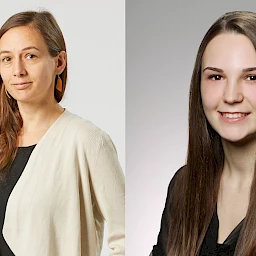
Michael Lehnert has spent more than 15 years exploring how technology can help businesses use resources more intelligently and sustainably. In senior positions at international technology companies, he gained experience with emerging technologies such as the Internet of Things (IoT) and artificial intelligence (AI). In these roles, he was responsible for complex digitalisation projects for organisations including HeidelbergCement and EnBW. At the same time, he developed an early interest in sustainable business models, ranging from renewable energy to urban green-tech solutions. Today, Michael Lehnert is CEO of seventhings, a leading European platform for digital and circular asset management. Further information:https://www.linkedin.com/in/michael-lehnert-business/

seventhings provides transparency about the physical resources companies own, how they are used and how furniture, IT equipment and other assets can remain in circulation for longer. In doing so, Michael Lehnert brings together two major transformations of our time: digitalisation and the circular economy. His focus is on how data, AI and intelligent software can turn corporate inventories into strategic resources – helping businesses reduce costs, resource consumption and CO₂ emissions. Further information: https://www.seventhings.com
Cover photo: Newen Spaces / IBA