

 Johannes Füß
 Long periods of sitting, one meeting after another and barely any time to move in between: for many people, this is still part of everyday working life. At the same time, hybrid working models have blurred the boundaries between the office, home and other places of work. This is also changing the way we need to think about health at work. Who takes responsibility when work is no longer tied to a fixed location? And how can organisations create conditions that genuinely support people’s health?
Employees’ expectations have changed. Health and wellbeing are increasingly becoming criteria by which employers are judged. According to the international EGYM Wellpass study „The Future Fit Employer“, 88 per cent of employees are concerned that their current working conditions could have a long-term impact on their health. In Germany, 49 per cent of employees report a lack of daily physical activity.
This makes one thing clear: health is no longer simply an individual matter. It is closely linked to work organisation, leadership and organisational culture, as well as the design of workplaces. For organisations, therefore, the question is no longer so much whether they should address employee health, but how they can do so effectively in an increasingly hybrid world of work.
When the working day gets in the way of movement
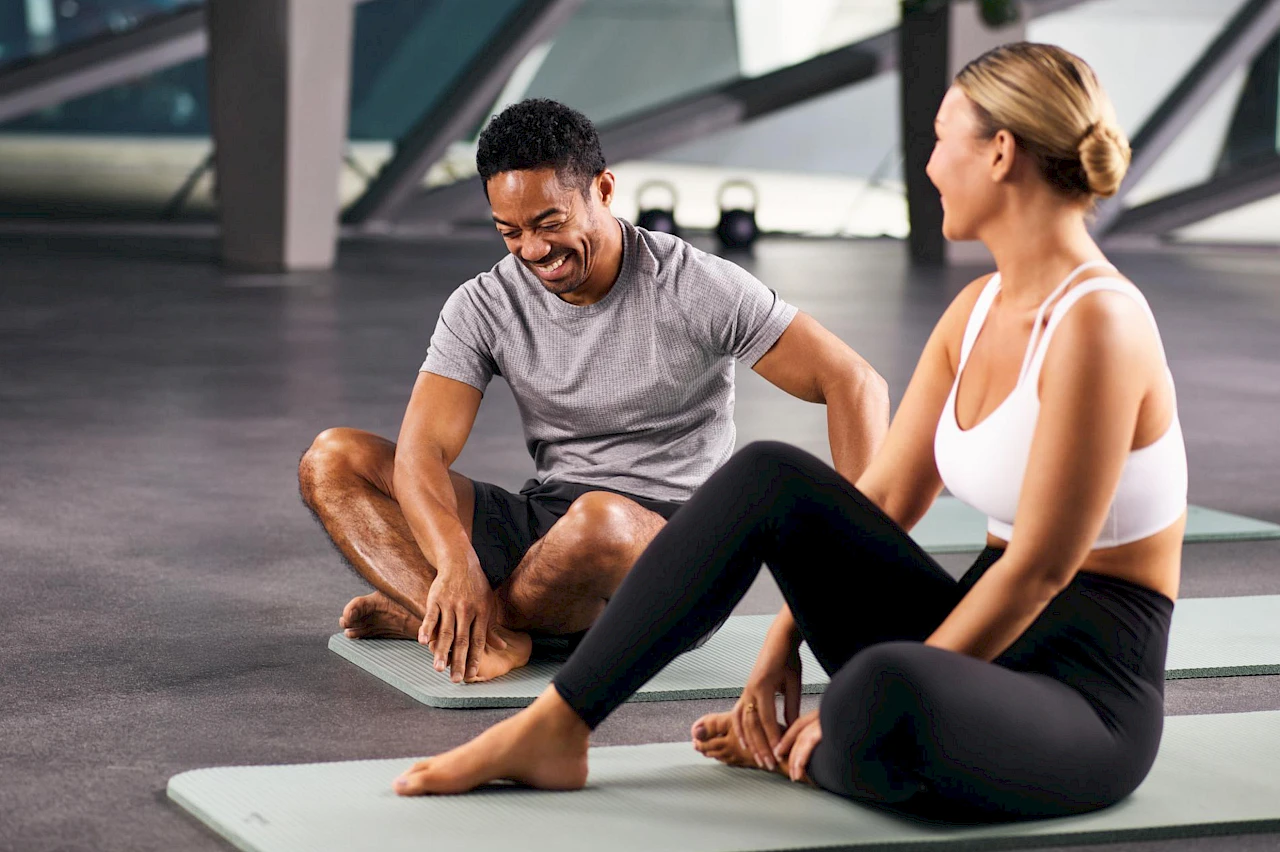
The human body is designed to move. Yet modern working life often looks very different. Screen-based work, virtual meetings and long periods of sitting are particularly characteristic of knowledge work. Mobile working may have created new freedoms, but it has not automatically solved the problem of physical inactivity.
The EGYM Wellpass study reveals a clear gap between awareness and action: employees regard sport and physical activity as an important way of supporting their health. At the same time, only six per cent are physically active every day, while 37 per cent say they rarely or never exercise.
The problem, therefore, is not simply a lack of health awareness. The conditions in which people work also matter. Physical activity needs to fit around different working hours, workplaces and personal circumstances. A health initiative that is available exclusively at a company’s premises, for example, may struggle to reach employees who predominantly work remotely or from home.
This is precisely where the hybrid world of work is changing the requirements for workplace health promotion. Health can no longer be tied exclusively to a particular place or fixed time slot.
From benefit to work culture
Whether it is a fruit basket, a back exercise class or discounted gym membership, workplace health promotion has long been associated primarily with individual initiatives. But an initiative alone does not change a work culture.
The more important question is what conditions everyday working life itself creates. Is there enough time for a break between two meetings? Is movement regarded as a natural part of the working day, or as an interruption to the ‘real’ work? Do leaders encourage healthy working practices? And can employees access options that suit their individual circumstances?
Health is therefore becoming a design challenge that extends far beyond traditional employee benefits. Leadership, work organisation, communication, spaces and opportunities for movement and prevention all need to work together.
Hybrid working models add another dimension: individuality. Someone working in the office may need different options from someone working from home. People who enjoy running or going to the gym will respond to different opportunities than those who prefer yoga, swimming, climbing or short digital exercise sessions.
Modern workplace health promotion therefore needs to provide enough flexibility for employees to decide for themselves what works best in their everyday lives.
Health needs visibility
Even a wide range of initiatives will have little impact if employees are unaware of them. Almost half of the employees surveyed for The Future Fit Employer, for example, do not know what health initiatives their own employer offers.
Communication therefore becomes an essential part of an organisation’s health strategy. Workplace health promotion needs to be visible and regularly integrated into everyday working life. This could take the form of recurring prompts, shared activities or short movement breaks, as well as leaders who actively model healthy working practices.
The key is not to treat health as yet another task employees are expected to fit into an already busy working day. Instead, it is about creating conditions that make healthy behaviour easier.

What does health have to do with the office?
This question becomes particularly interesting as organisations rethink their workplaces. If the office is no longer the default location for every type of activity, it needs to offer a recognisable benefit. Interaction and collaboration are part of that – but so are health and wellbeing.
This also brings the design of the physical workplace into focus. Working environments can either encourage or inhibit movement. They can enable people to adopt different postures, encourage movement and interaction, provide places to retreat and support transitions between focused work and collaboration.
Workplace health promotion and workplace design should therefore not be viewed as separate disciplines. Ultimately, both are concerned with the same question: What conditions do people need in order to work well over the long term?
This perspective encompasses everything from ergonomic workstations and opportunities for movement to the design of break areas and social spaces. At the same time, it does not end at the office door. In a hybrid world of work, organisations need to think about health across different working environments.
Health is becoming a leadership issue
This also has implications for leadership. Seeing health as part of work culture does not mean monitoring how many steps employees take each day or whether they make use of a particular fitness programme. Rather, it is about creating an environment in which healthy ways of working are both possible and accepted.
This also means addressing workload. Physical activity can make an important contribution to prevention, but it cannot replace the need to tackle overloaded calendars, constant time pressure or insufficient opportunities for recovery.
A contemporary health strategy therefore connects physical and mental health with work organisation and leadership. In this way, individual measures become part of a holistic approach to the conditions in which people work.
The world of work needs a new health culture
Discussions about the future of work often focus on artificial intelligence, hybrid working models, new office concepts or changing leadership structures. Health belongs in this conversation too. After all, technological and organisational change can only deliver lasting value if people are able to work well within these new conditions over the long term.
The crucial shift may therefore be to stop viewing workplace health as an additional benefit and instead understand it as part of the infrastructure of modern work – spatially, organisationally and culturally.
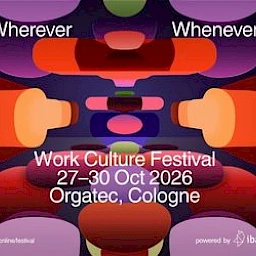
How this can be achieved will also be explored at the Wherever Whenever – Work Culture Festival 2026, taking place from 27 to 30 October at ORGATEC in Cologne. EGYM Wellpass is a theme partner of the festival and will bring a range of perspectives on health, wellbeing, performance and leadership to the programme.
This puts health where it belongs: not as an isolated employee benefit, but as part of the interplay between leadership, culture, work organisation and workplace design.
Johannes Füß is Senior Vice President at EGYM Wellpass, Germany’s leading corporate fitness network. His work focuses on how preventive healthcare can become an integral part of modern working environments and how organisations can support employee health, wellbeing and performance. In addition, he is the founder of Level Up HR, a community dedicated to the exchange of modern HR practices, and host of the podcast of the same name. His work connects topics such as employee wellbeing, company culture and the future of work with practical approaches to modern HR management. Further information: https://us.egym-wellpass.com/en-us
Titelbild: © EGYM Wellpass