

 IBA editorial team
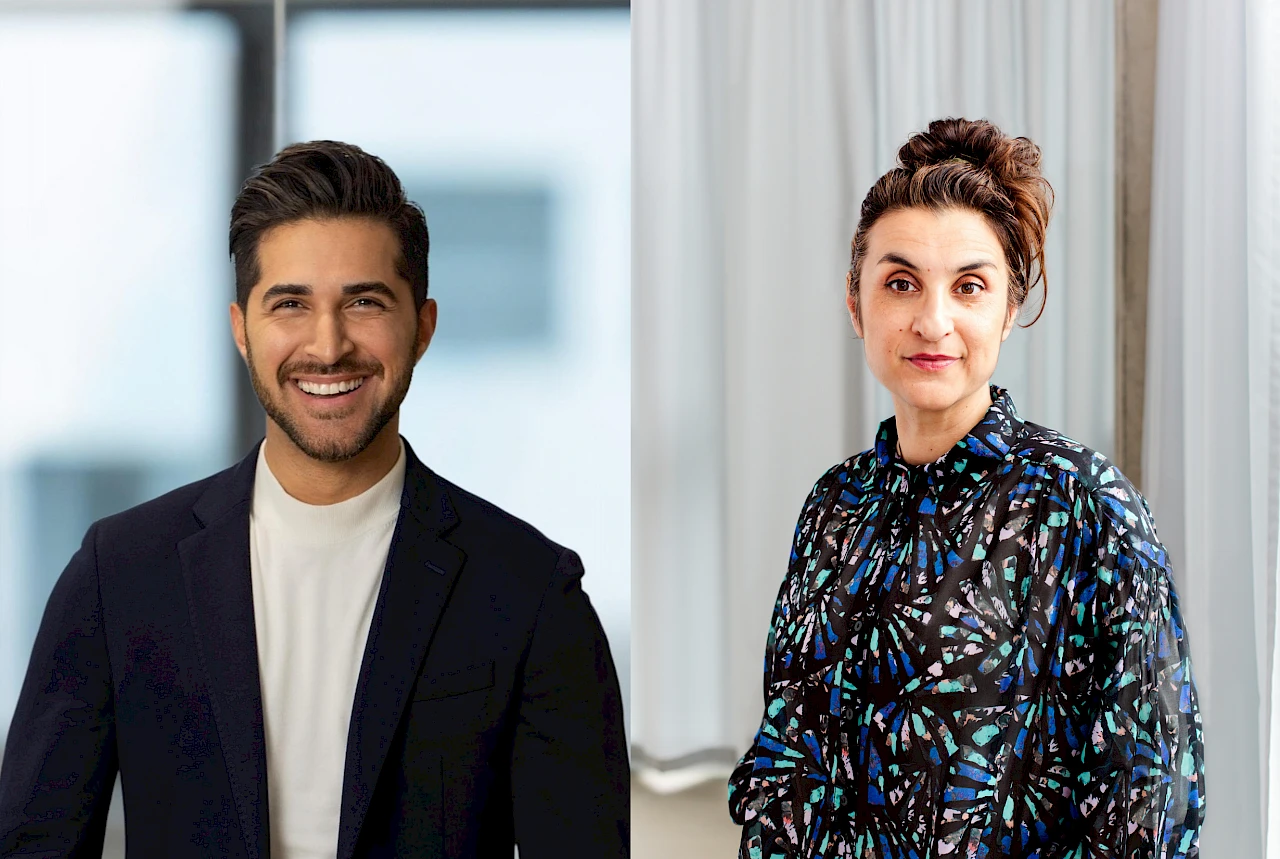
 Artificial intelligence is changing the world of work – and with it, the demands placed on the office. As AI increasingly takes over routine tasks, conducts analyses, simulates different scenarios and prepares decisions, the question arises as to which tasks will remain for humans and what kind of spaces they will need to perform them. For Gerda Karal and Shahin Farahzadi, one thing is clear: the office will not become obsolete. But its role is changing.
At the Wherever Whenever – Work Culture Festival 2026, Gerda Karal of LEPEL & LEPEL and Shahin Farahzadi of one.vision will discuss what these developments mean for the future of the office. Ahead of their talk, we asked them seven questions. Here are their answers.
Your talk is entitled ‘What will the office of the future look like if you are only the co-pilot?’. So who will actually be in the driving seat in the future – humans or AI?
Gerda Karal: If AI ends up in the driving seat one day and we are simply sitting beside it, then we will already have done something wrong. It will probably take a great deal of work off our hands. It can analyse, simulate, generate different options and suggest things that currently take entire teams hours or even days to develop. But it does not know where we want to go as a company or what kind of world we actually want to shape. So the interesting question is not who presses the button. What matters is who sets the direction. If I suddenly have a hundred good options in front of me, I need someone who can recognise which of them is genuinely good. Taste, experience, judgement and responsibility will not become less relevant as a result – they will become more valuable.
Many companies are discussing AI tools. You talk about a change in the logic of work. What is the difference?
Shahin Farahzadi: If AI enables me to write my emails 30 per cent faster but I then go on to have exactly the same meetings, I have not created a new world of work. It becomes interesting when we ask ourselves what we are going to do with the time we get back. Which tasks will still be needed at all? Which decisions can be made earlier? Which teams really need to come together in person? And what do we want people to come into the office for in future? At that point, we are no longer talking about a new tool. We are talking about organisational change. And that has consequences for architecture. If work changes, we cannot simply retain the old floor plan and add another digital tool somewhere.

As routines, analyses and even decision-making proposals become increasingly automated, what tasks will keep the office relevant in the future?
Shahin Farahzadi: Today, an office has to make the commute worthwhile. If I can concentrate better at home, I do not need a desk in the city where I do exactly the same thing with more distractions. I come into the office because things happen there that are less likely to happen at home. I meet people, come across things by chance, we discuss ideas, discard them, sketch things together, laugh, perhaps even argue occasionally – and ultimately arrive at an idea that none of us had before. The office is no longer taken for granted and, as a result, is becoming more important. At LEPEL & LEPEL, we have been talking about building relationships for many years. I believe that, in future, we will need to understand this even more literally. The office is no longer the place where work is monitored. It is the place where relationships, culture and shared ideas emerge.
You say that the office is becoming more strategic. How can you recognise a strategic office and one that is still based on old ways of thinking?
Gerda Karal: For us, a good office does not begin with the furniture plan. If the first question is how many desks we can fit per square metre, we may be optimising the wrong thing from the outset. First, we want to understand how a company actually works. Where are good decisions made? Where do people meet? Who needs quiet? Which teams need to encounter each other more often? How should the company feel to employees and visitors? Only then does this translate into space. For us, a strategic office is corporate strategy made tangible through the built environment. At its best, you can sense how an organisation thinks and how it wants people to interact as a community.
Which spatial qualities will become more important in future: concentration, creativity, interaction or something else entirely?
Gerda Karal: All of them, really. What will matter more is an office’s ability to support transitions between these different states. We like to think of it more as a good city than as a conventional office space. A city has lively squares, quiet streets, places to meet, places to eat, places to retreat to and sometimes unexpected corners that have not been completely predetermined. Why should a good workplace be any less diverse? There is also something that is easily forgotten amid all the technology: we experience spaces through our bodies. Light, acoustics, materials, temperature, smells and movement all shape how we feel and how we work. The more digital our work becomes, the more interesting we therefore find spaces that feel genuinely real.
Many companies already have existing office space. What can they do today to gradually prepare their workplaces for this new reality?
Shahin Farahzadi: First of all, do not rip everything out. We would start by observing. Which spaces really work? Which meeting rooms are constantly full? Where does nobody ever sit? Where do people remain standing and talking for another 20 minutes after a meeting, even though the space was never designed for that purpose? There is an incredible amount of information in these observations. You can then intervene very selectively and experiment. Perhaps a space needs fewer fixed workstations and one really good project room. Perhaps there are not enough places to retreat to. Perhaps a large conference area is actually being used for entirely the wrong purpose. We like the idea of prototyping: try out a change, observe what happens, learn from it and then develop it further. An office does not need to be finished today for the next 20 years. It should still be adaptable in 20 years’ time.
Which misconception about the future office do you think will surprise us most in five years’ time?
Gerda Karal: That the office of the future has to look futuristic. I actually believe the opposite. In five years’ time, we may see less visible technology than we do today, because truly good technology will eventually disappear into the background. At the same time, materiality, atmosphere, food, interaction, nature, movement and genuine human connection will become more important. The office of the future does not have to look like a spaceship. It may even look more human than the office of today.
Thank you for talking to us.
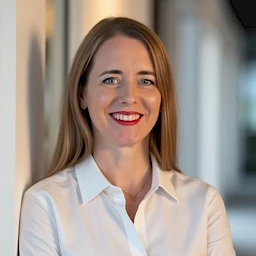
Gerda Karal is an interior architect (bdia) and Managing Partner at LEPEL & LEPEL. Her work focuses on identity-driven interior architecture and the design of modern workplaces that combine functionality, identity and sustainability. As a DGNB Registered Professional, she also has a particular interest in climate-conscious planning and construction. Further information: lepel-lepel.de
Shahin Farahzadi is an architect and Chief Strategy Officer at one.vision. His work focuses on BIM, artificial intelligence and digital general planning. He combines strategic project development, data-driven planning and digital technologies with the aim of making planning processes more transparent and reliable. Further information: https://one.vision/
Cover photo: ©Shahin Farahzadi, ©Gerda Karal